
Format
Outdoor / seating on the ground
Program Description
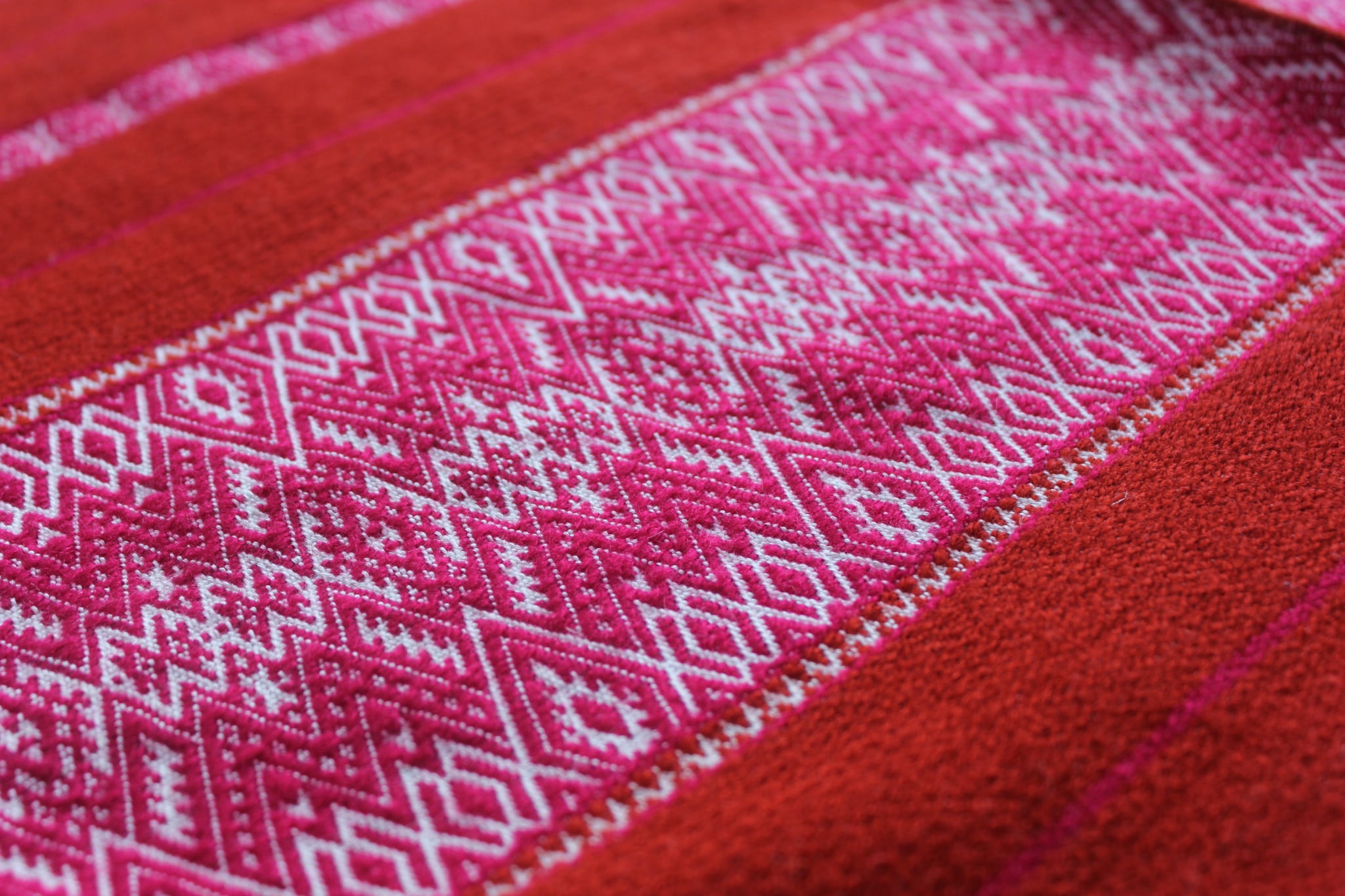
Bodies of Warp and Weft: Dimensions in the Making is a performance art work about weaving by weavers of the pan-Atayal peoples. It is an ongoing experiment, a work-in-progress that keeps taking shape and grows out of the weavers’ own life experiences. Bringing the knowledge, memories, and skills they have inherited into a concrete plaza in the bustling city, the weavers respond with their bodies and actions, exploring how ancestral teachings relate to contemporary life.
Gaga is a central Atayal cultural concept. It covers the teachings and taboos left by the ancestors and the shared rules and codes that guide daily life in a community, and it binds together the people’s social relationships, their land and environment, and their belief in the ancestral spirits. The weavers are both holders of weaving knowledge and interpreters of contemporary life. On site, through different bodily actions, they translate the process and experience of weaving into acts of weaving repeated again and again across the space. Echoing through the noisy concrete jungle, these acts bring a different sense of time into an urban space used to speed, straight lines, and efficiency. As warp and weft cross, and within everyday actions, how is culture carried by the body? And how does it keep taking shape in contemporary practice?
If Weaving Took the Shape of a Life, What Would It Be?
Text by marang aly
As warp and weft cross and interlace, as the loom echoes and shudders, as woven cloth is finished and spread open, the paths that join and stitch seem to form a meeting point of life, between birth and passing, beginning and end, the woven and the not yet known…
Birth youth adulthood work marriage raising children nurturing growing old death _ until the soul reaches its ancestral dwelling. Clothing changes with identity, role, and surroundings, marking each stage of a person’s life and carrying the pulse of a community’s times.
Fed by the land, we carry our load: the body inherits skills and puts experience into practice; the mind sorts through thoughts and lives through circumstances. Our actions will pass through one another’s dimensions and, in the ordered and scattered patterns of the weave, quietly answer what changes and what stays the same across time and space. What we foresee, what we long to weave, what we come to meet: what shape will it take?
★ This work was developed jointly by the weavers and the creative team, taking shape through ongoing dialogue and work grounded in fieldwork, craft, life experience, and bodily practice.
marang aly | Co-creating Director
An Amis artist from Tafalong, marang aly was born and raised in Yilan. With a mother who is a cultural worker, marang aly grew up immersed in community cultural life such as the ilisin (annual ritual), and holds a deep attachment to and sense of mission toward Amis culture. A graduate of the Indigenous performing arts degree program at National Dong Hwa University, marang aly works across the body, theater, performance art, moving image, and curating, often starting from the many ways language and thought can be translated. marang aly is the founder of ilaLan Lab and an arts administrator at Langasan Theatre.
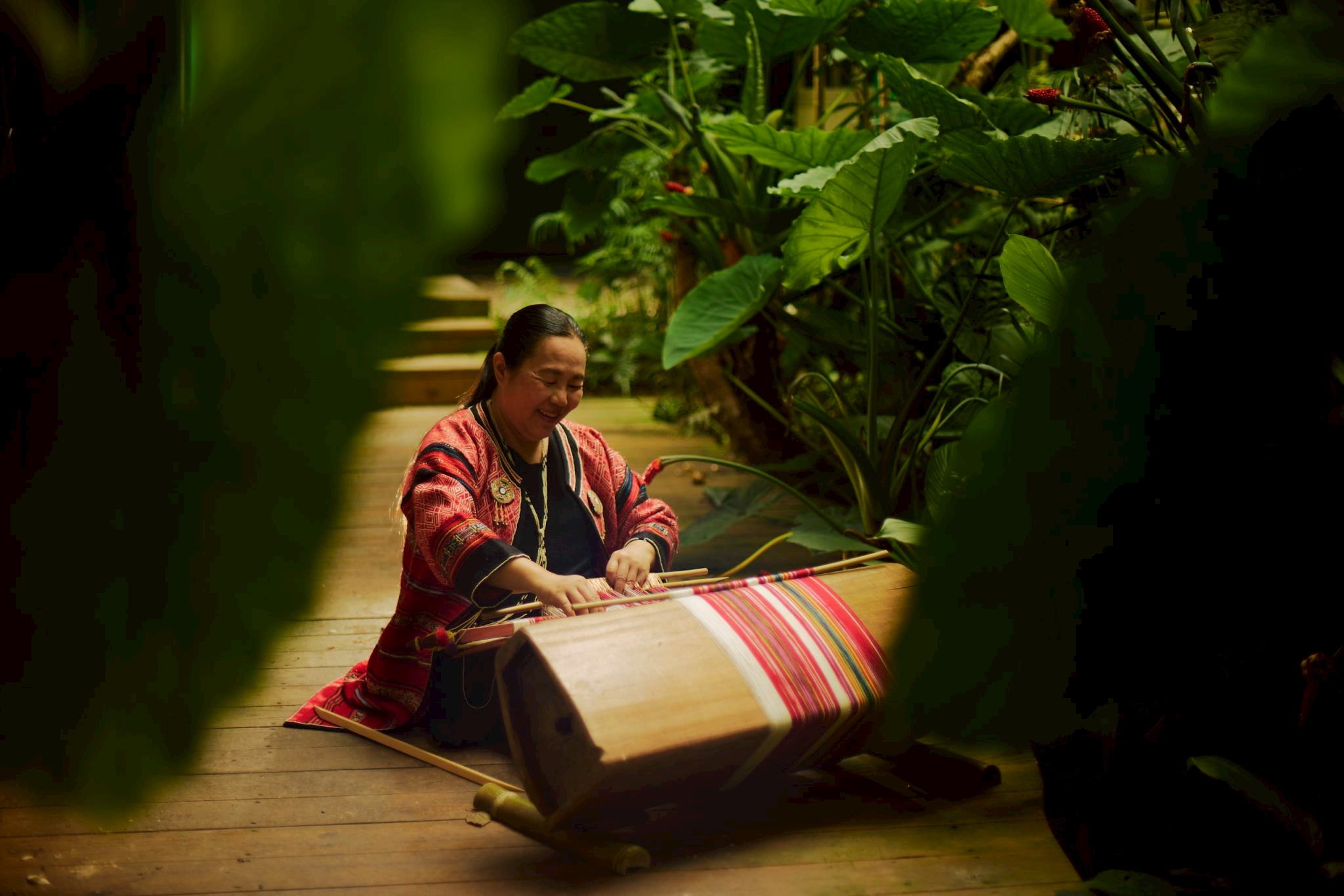
Yuma Taru | Cultural Advisor / Weaving Artist
In 2016 the Ministry of Culture recognized Yuma Taru as a preserver of the important traditional craft of Atayal dyeing and weaving, making her the youngest of Taiwan’s “national living treasures.” Over nearly twenty years she has carried out fieldwork in more than 200 pan-Atayal communities, and has visited museums in the United Kingdom, Canada, Japan, China, and elsewhere to find, photograph, document, and systematically classify Atayal cultural objects.
From 2001 she trained community weavers to recreate traditional garments held in museum collections, and by 2009 they had remade nearly 500 pan-Atayal garments. Seeing the urgent need for Indigenous education, in 2010 she founded the Sewurao Indigenous Education Center, which teaches Atayal language and cultural knowledge from early childhood. In 2016 she helped establish the first Atayal experimental elementary school, and in recent years she has been advocating for a school of Atayal dyeing and weaving. Since 2020 she has led the revival of ramie, a key weaving material, creating a circular economy that uses the whole plant and bringing new, forward-looking strength to the community’s cultural economy.
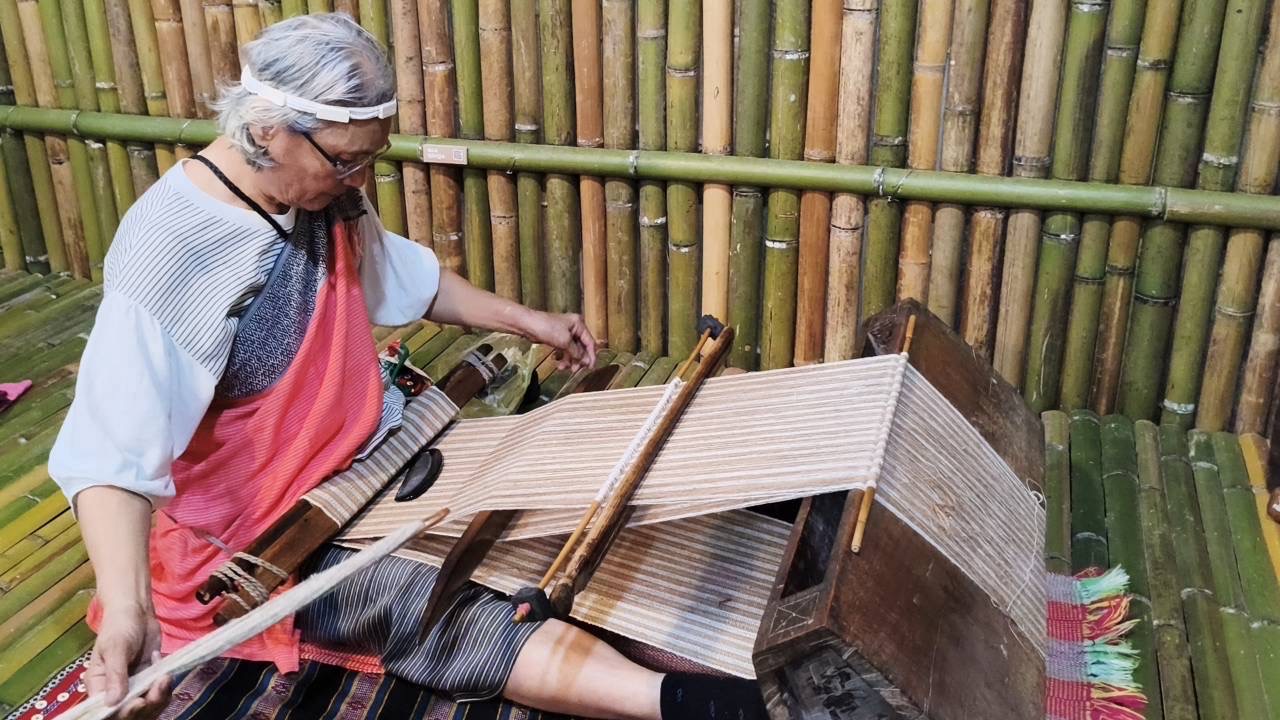
Upah Tali | Weaving Artist
Upah Tali learned from her mother from an early age. At a time when Atayal backstrap-loom weaving was fading, her mother’s devotion to weaving inspired her to take it up again. Guided by Father Bayaciz, she came to understand the cultural meaning of woven patterns, and she studied techniques closely with elders. Now in her seventies, she weaves every day and sees teaching as her mission, continuing to weave even when unwell. With her sister she founded Tminun na Pi to bring weaving into everyday life and pass this precious craft on.
In 2026 she was registered by Taoyuan City as a preserver of the traditional craft Cinninun nqu Sbtunux ru Gogan (weaving of the Atayal Sbtunux and Gogan groups).
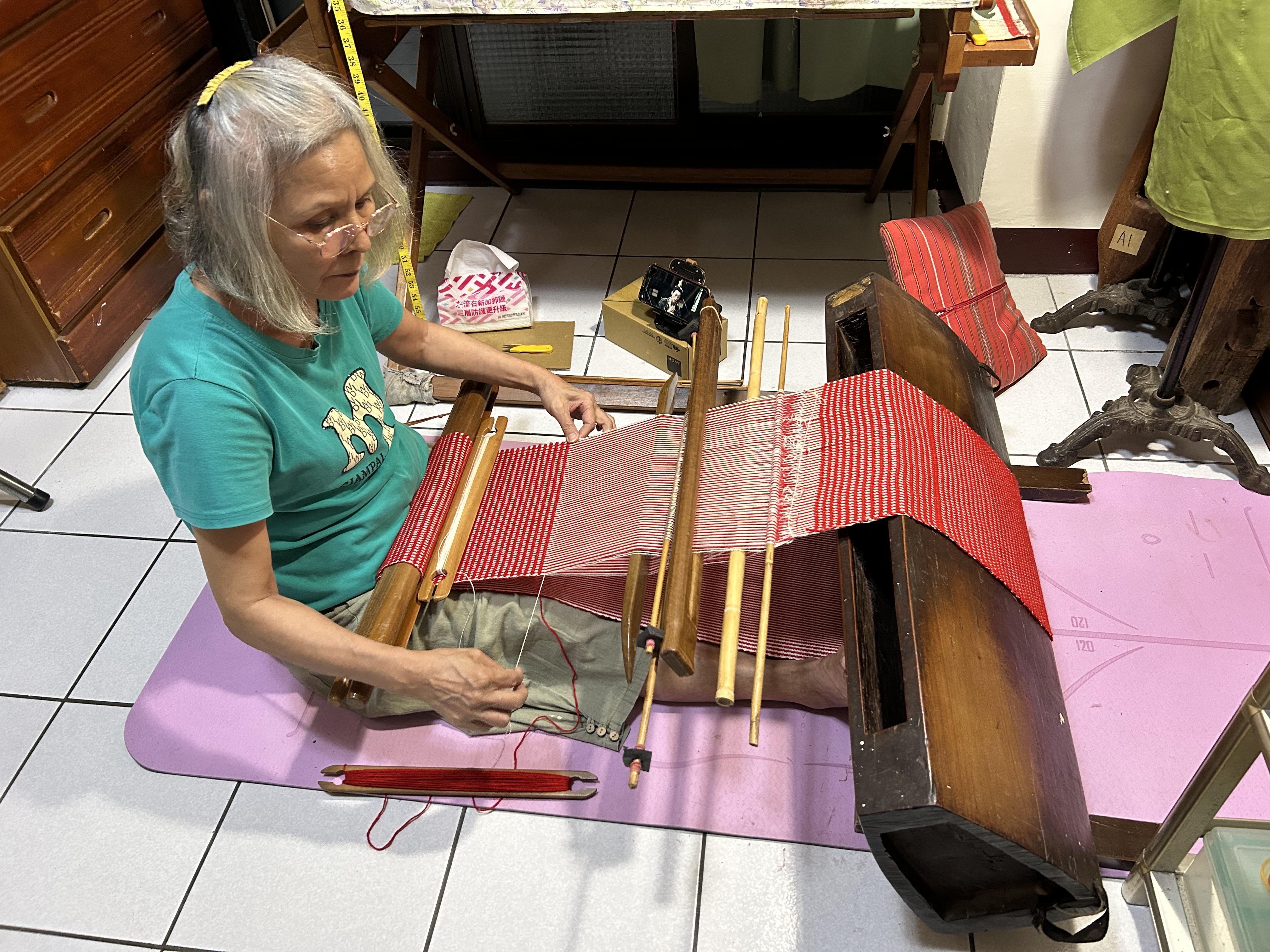
Lomuy Tali | Weaving Artist
Lomuy Tali learned weaving from her mother as a child and has devoted nearly thirty years to Atayal weaving. She specializes in the traditional patterns of Fuxing and in floating-weft techniques. With her sister she co-founded Tminun na Pi, taking commissions and teaching to make a living. The sisters briefly joined Fu Jen Catholic University’s dyeing and weaving teacher-training program but had to stop when they could not manage both. Over many years of teaching, she has felt how hard it is to pass the craft on: young learners often stop at a taste of it, few persevere, and outsiders struggle to see its value, leaving her worried that the craft may be lost.
In 2026 she was registered by Taoyuan City as a preserver of the traditional craft Cinninun nqu Sbtunux ru Gogan (weaving of the Atayal Sbtunux and Gogan groups).
Lin Shu-Li | Weaving Artist
A craftsperson of the Taiwan Craft Home program, Lin Shu-Li has long worked to preserve, pass on, and renew the traditional dyeing and weaving of the Atayal and Saisiyat peoples. She practices the full traditional process, from growing dye plants and processing fibers to dyeing yarn and weaving. She founded the Shibi Dyeing and Weaving Workshop and her own brand, Taiyang You Jiao (The Sun Has Feet), bringing traditional dyeing and weaving into contemporary design and everyday aesthetics, and she continues to promote craft education, train new makers, and support the long-term cultural life of the community.
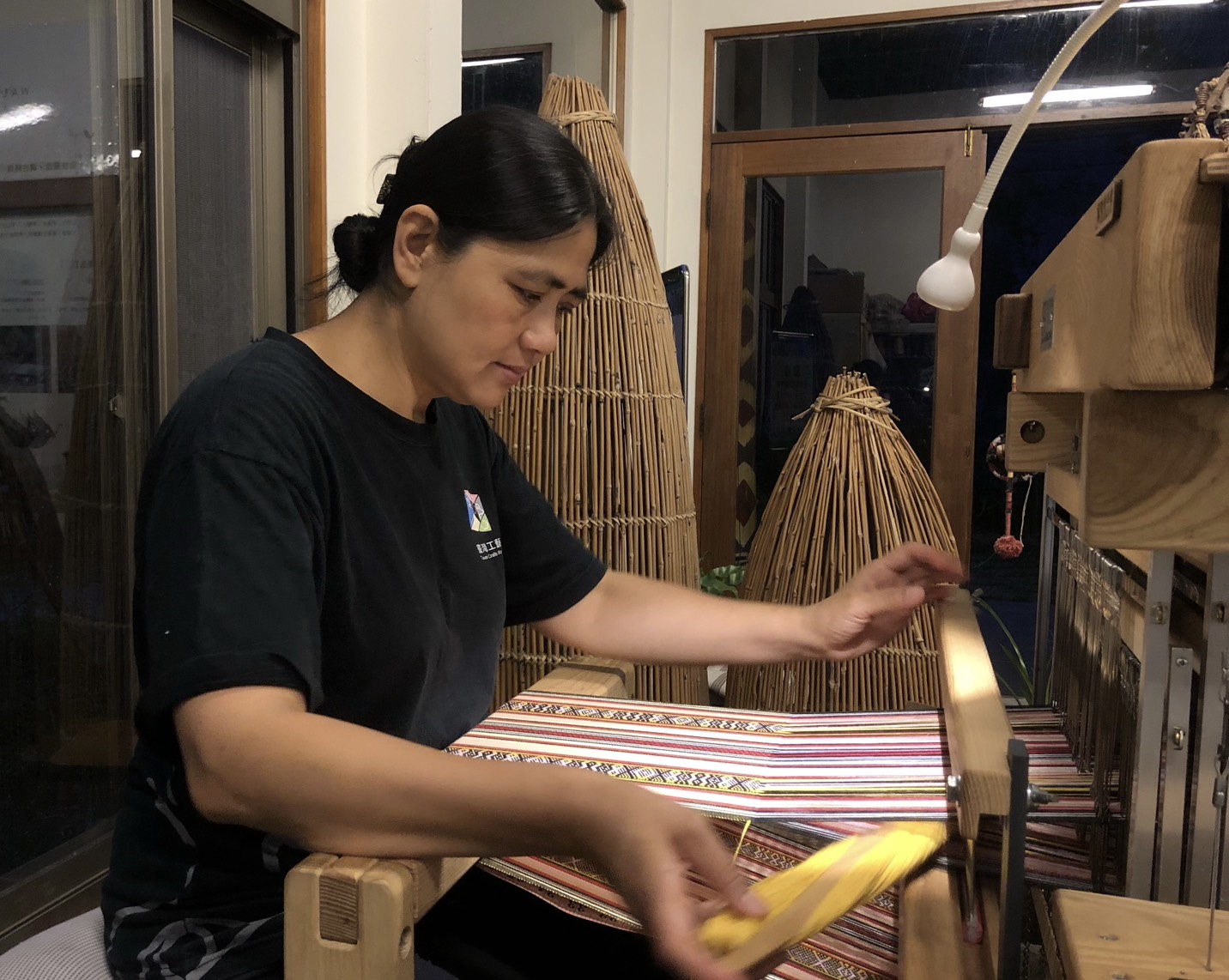
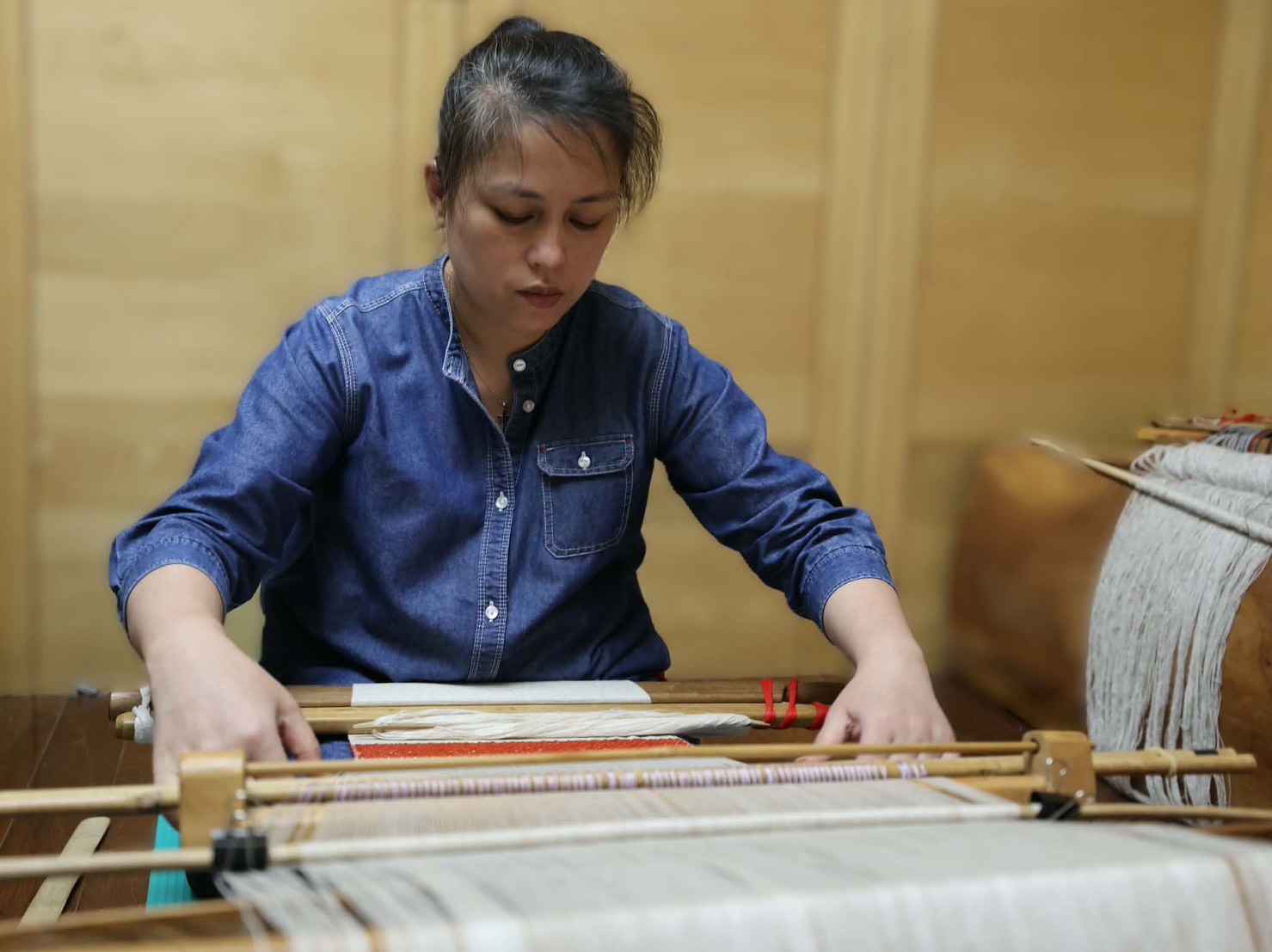
Yuri Abaw | Weaving Artist
An Atayal weaver born in 1978, Yuri Abaw is from the Rahu' community in Yisheng Village, Fuxing District, Taoyuan. She graduated from the Department of Industrial and Commercial Design at National Taiwan University of Science and Technology. In 2026 she was registered by Taoyuan City as a preserver of the traditional craft Cinninun nqu Sbtunux ru Gogan (weaving of the Atayal Sbtunux and Gogan groups). In 2025 she studied and analyzed Atayal textiles at the Tenri Sankokan Museum of Tenri University and the National Museum of Ethnology in Osaka. She now focuses on traditional weaving, reading and analyzing weave patterns and techniques, and documenting them in drawings.
Kagaw (Yen Ching-Chun) | Weaving Apprentice
Though Han Chinese by birth, Kagaw feels a deep connection to Indigenous cultures and what makes them unique. Kagaw began learning traditional Atayal dyeing and weaving out of a wish to help keep Atayal culture alive, and hopes to keep building skills and understanding along the path of cultural learning and revitalization, putting down deep roots in the land so that this precious culture can continue long into the future.
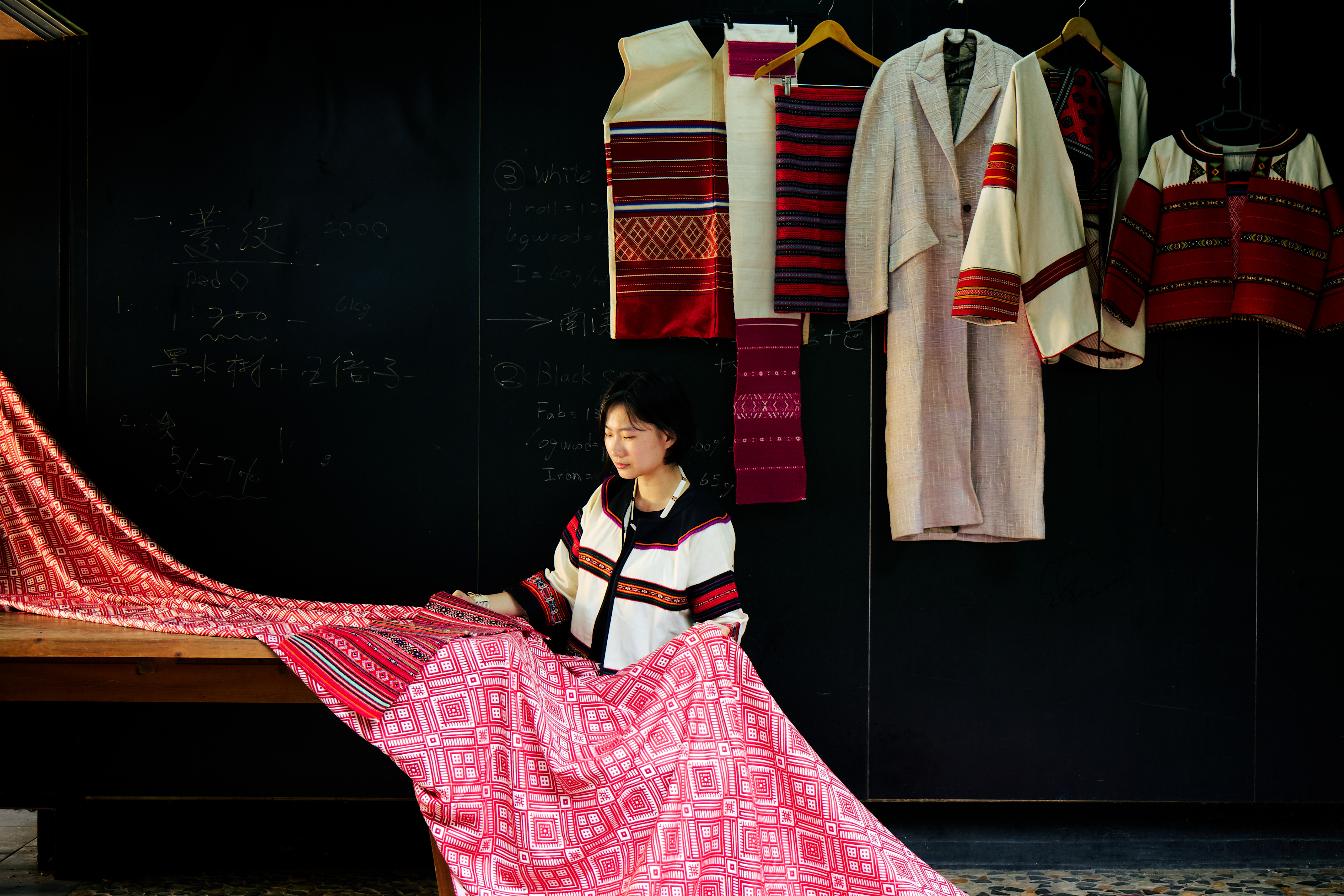
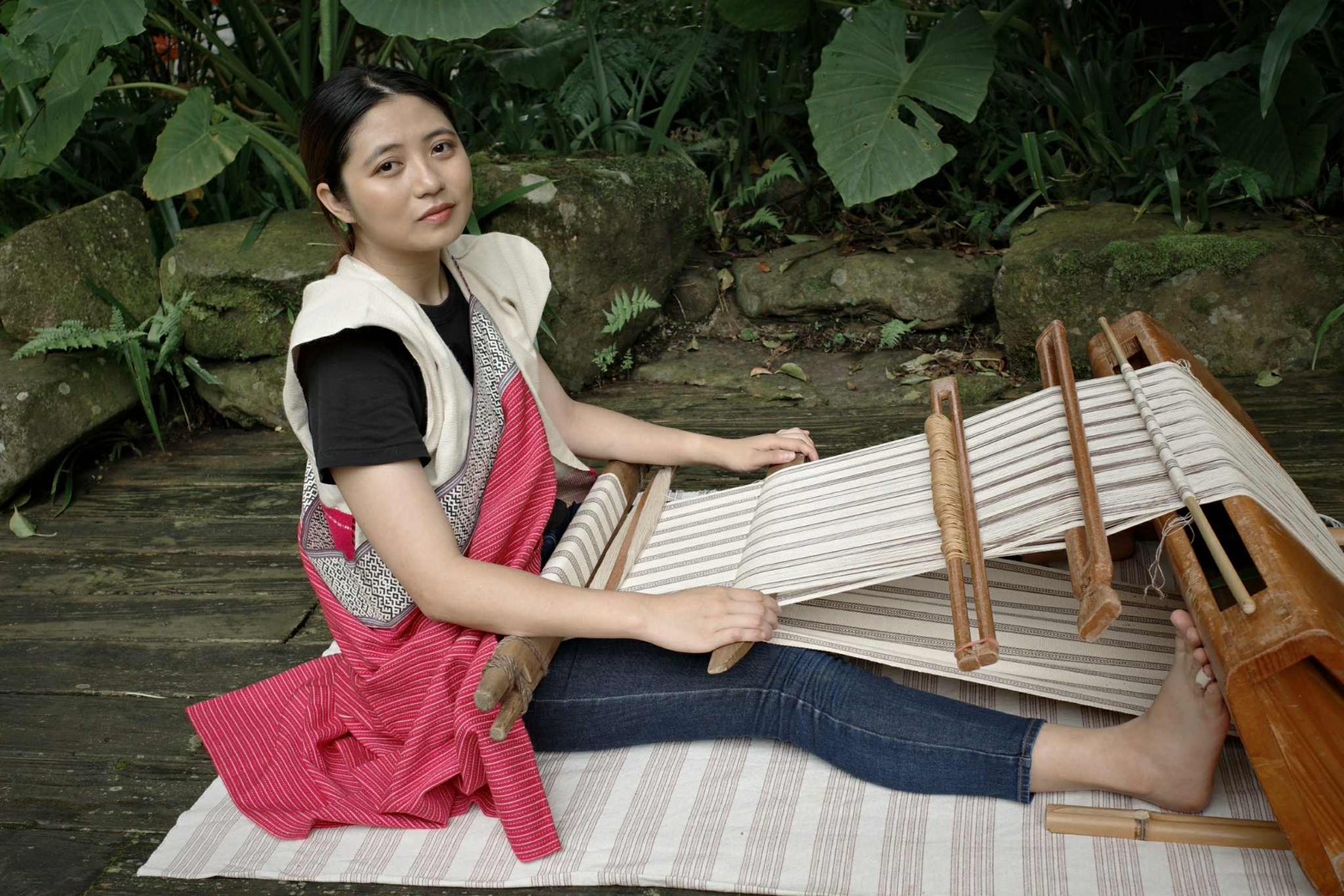
Rimuy Lorsing | Weaving Apprentice
A young Atayal woman from the Shibi community in Nanzhuang, Miaoli, Rimuy Lorsing is an apprentice in the transmission program for the important traditional craft of Atayal dyeing and weaving. For her, learning to dye and weave is a way back to the roots of her culture. Combining archival research, fieldwork, the study of cultural objects, and hands-on craft, she is steadily deepening her understanding of traditional garment techniques and their cultural context, and brings what she learns into her own work and teaching, carrying on the spirit of Atayal dyeing and weaving through ongoing learning and practice.
Lungah Baunay | Weaving Apprentice
From Llyung Penux, Lungah Baunay is an undergraduate at Tsing Hua College, National Tsing Hua University. In 2023 she joined the Bureau of Cultural Heritage’s transmission program for preservers of important traditional crafts as an apprentice, and continues to learn, practice, and research traditional dyeing and weaving, exploring how Atayal weaving is passed on and transformed today.
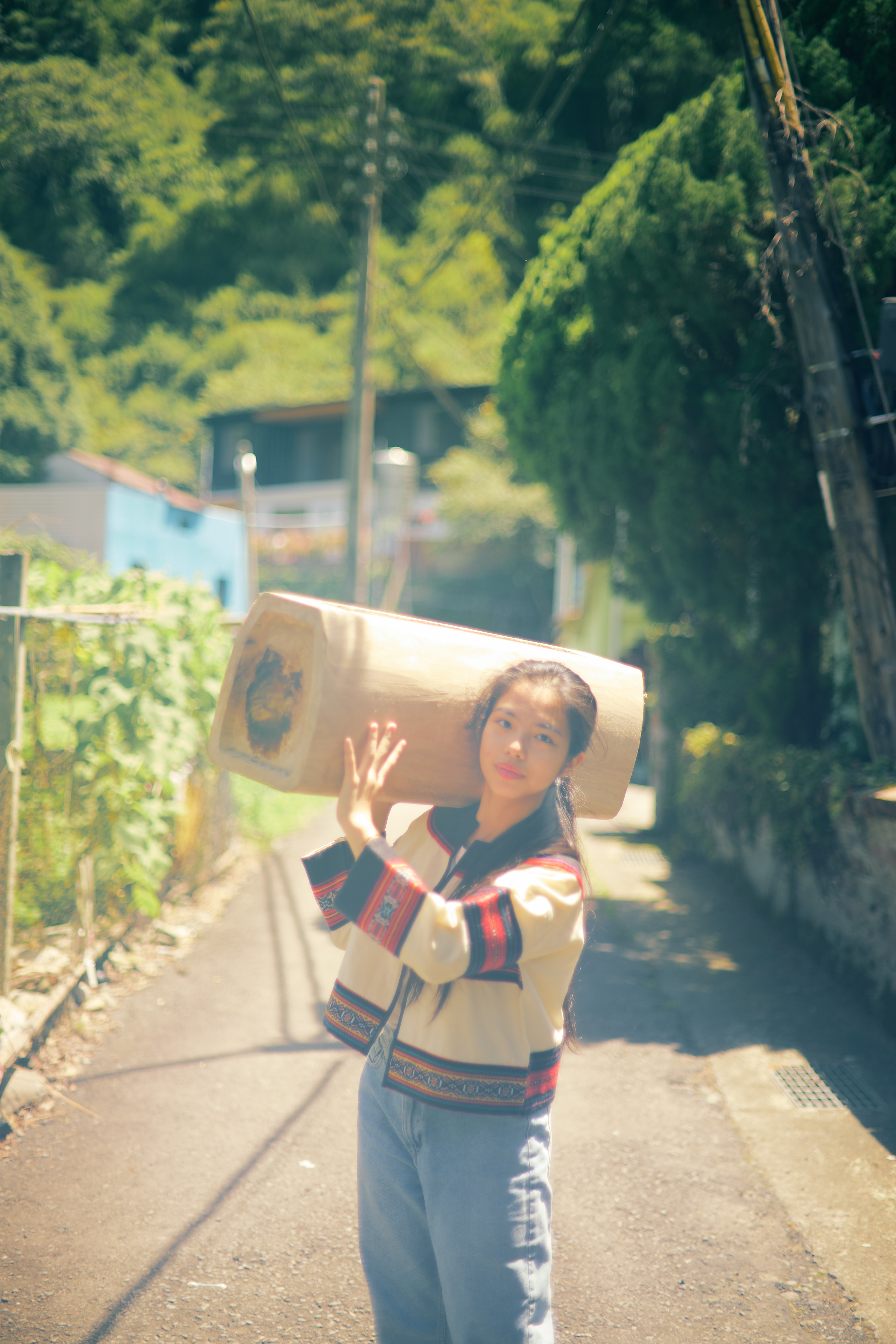
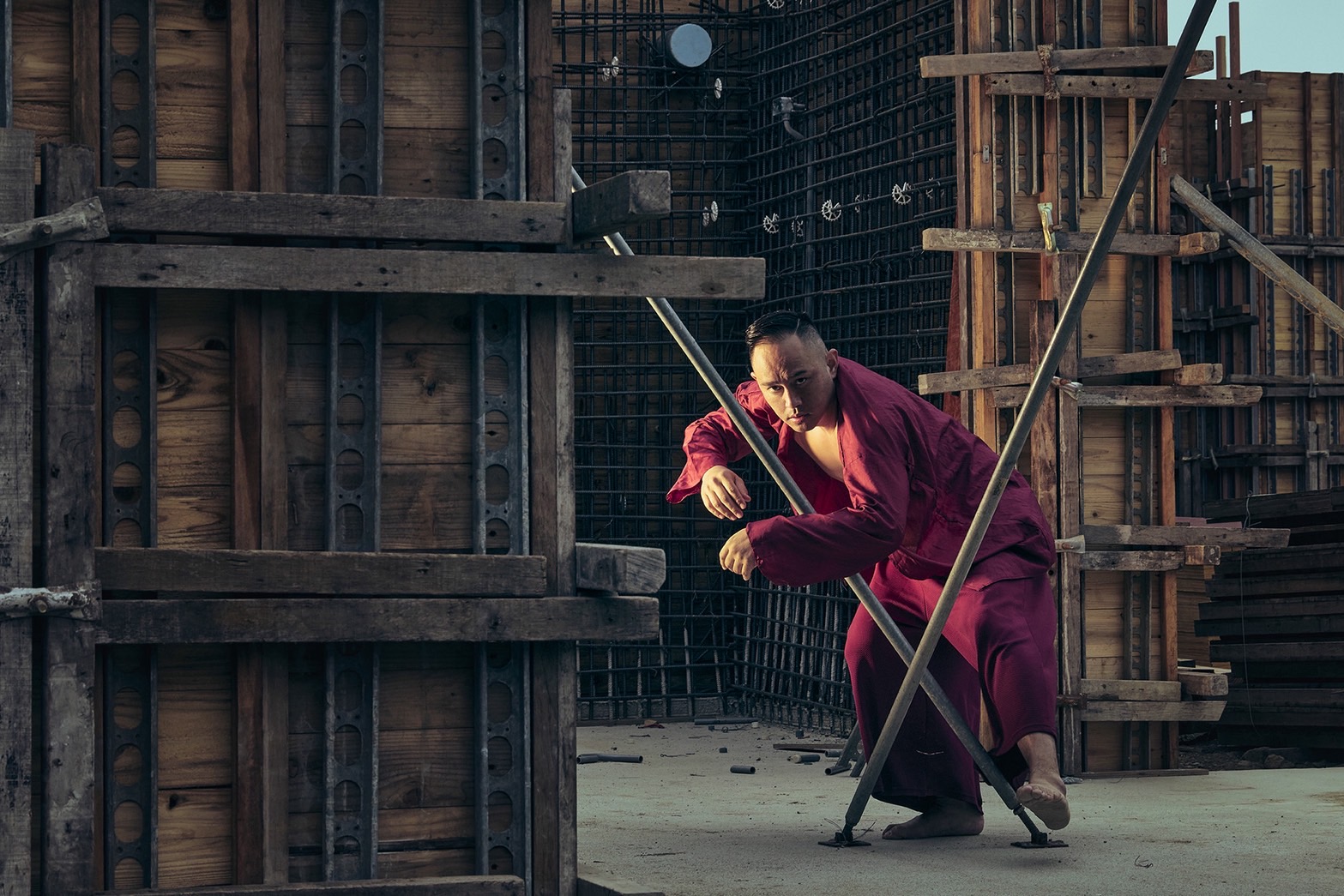
Bawxin Suyan | Performer
Bawxin Suyan is an Atayal from the Simaxian community in Tai’an, Miaoli. He works in the public service while continuing to make time for performance and creative work, and sees every identity he holds as tied to everyday life. His public service work brings him into contact with different people and situations and gives him ideas for his art, while culture, land, and community life have always shaped how he sees the world and understands performance and art.
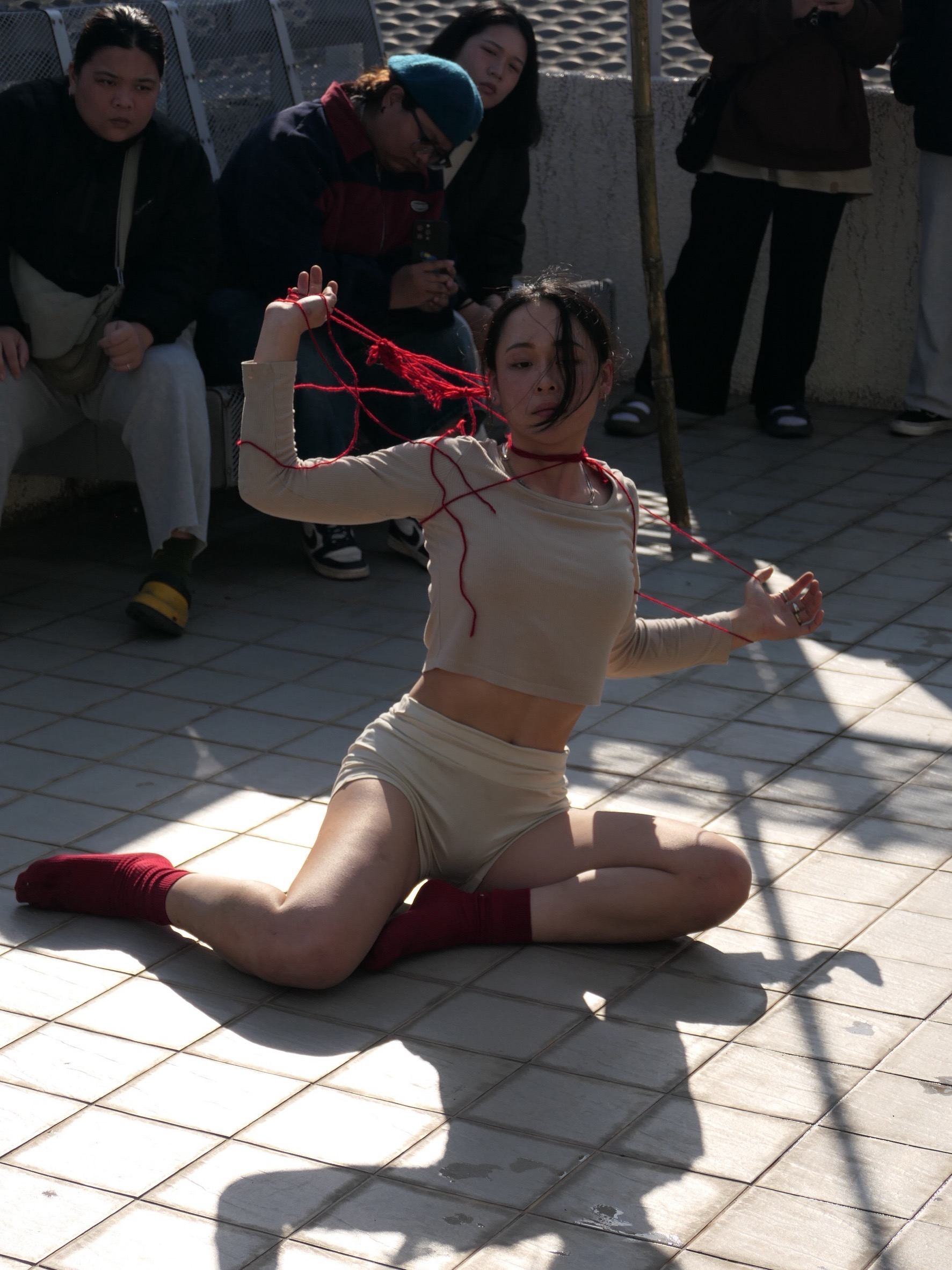
Enah Panay Mulani’ | Performer
A member of the Kinanoka community in Taitung, Enah Panay Mulani’ was born in Taoyuan and is a member of ilaLan Lab. With Amis Unseen Relations and cultural practice at the core of the work, Enah likes to explore the spiritual boundaries between the individual and the collective, and between culture and land, using the creative process to reflect on the survival of Indigenous cultures and on current affairs.
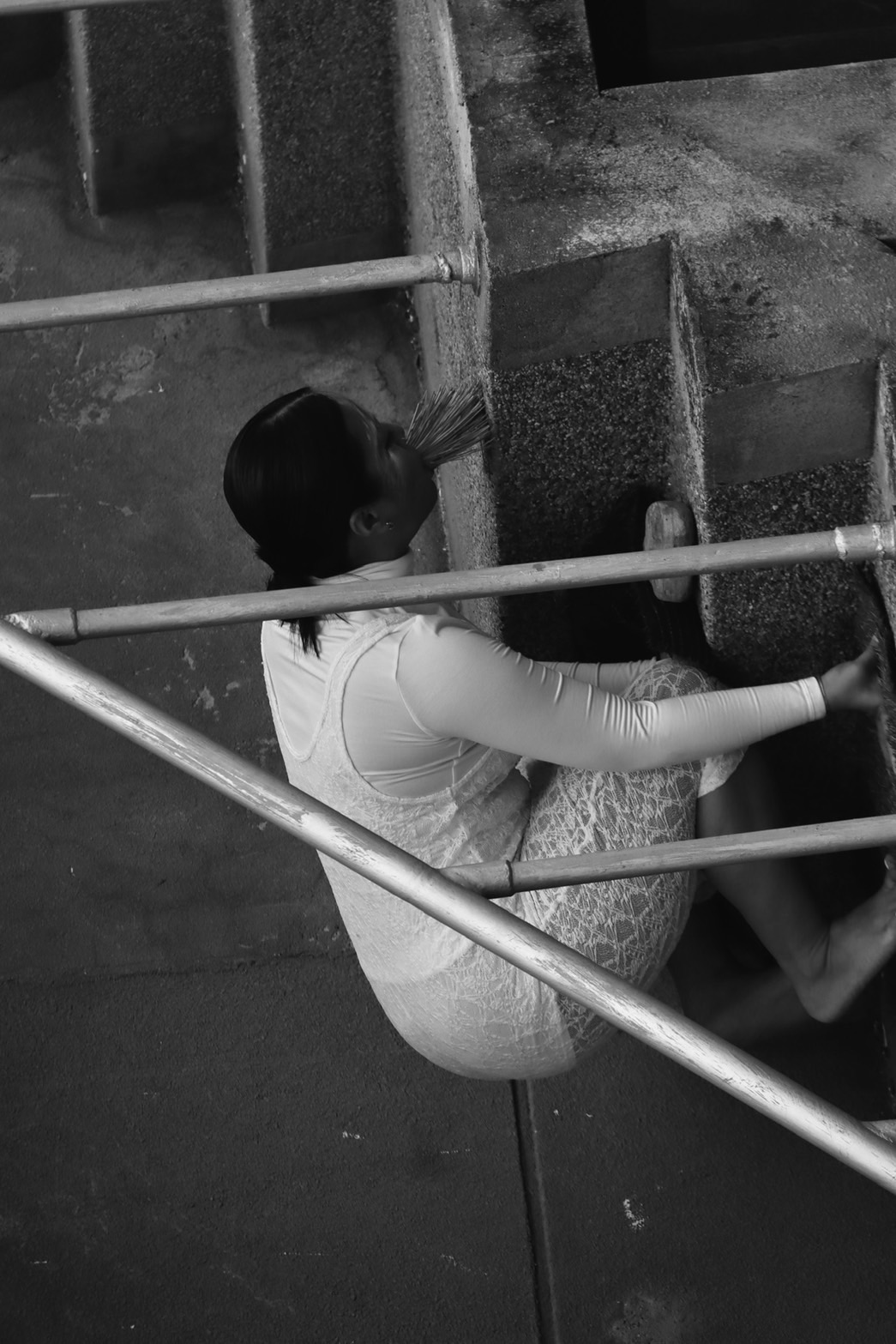
Selep Ljazunglung | Performer
A child of the Lalauran community in Taitung, Selep is also a student in the Department of Communications Design at Shih Chien University. Between earth and earth, water and water, space and space, people and people, Selep searches for a language that can speak to the present. Working across digital interaction, physical installation, and natural materials, Selep looks for ways to tell stories in many media, blending traditional beadwork with contemporary technology and design, finding a way through culture to tell the stories of today.
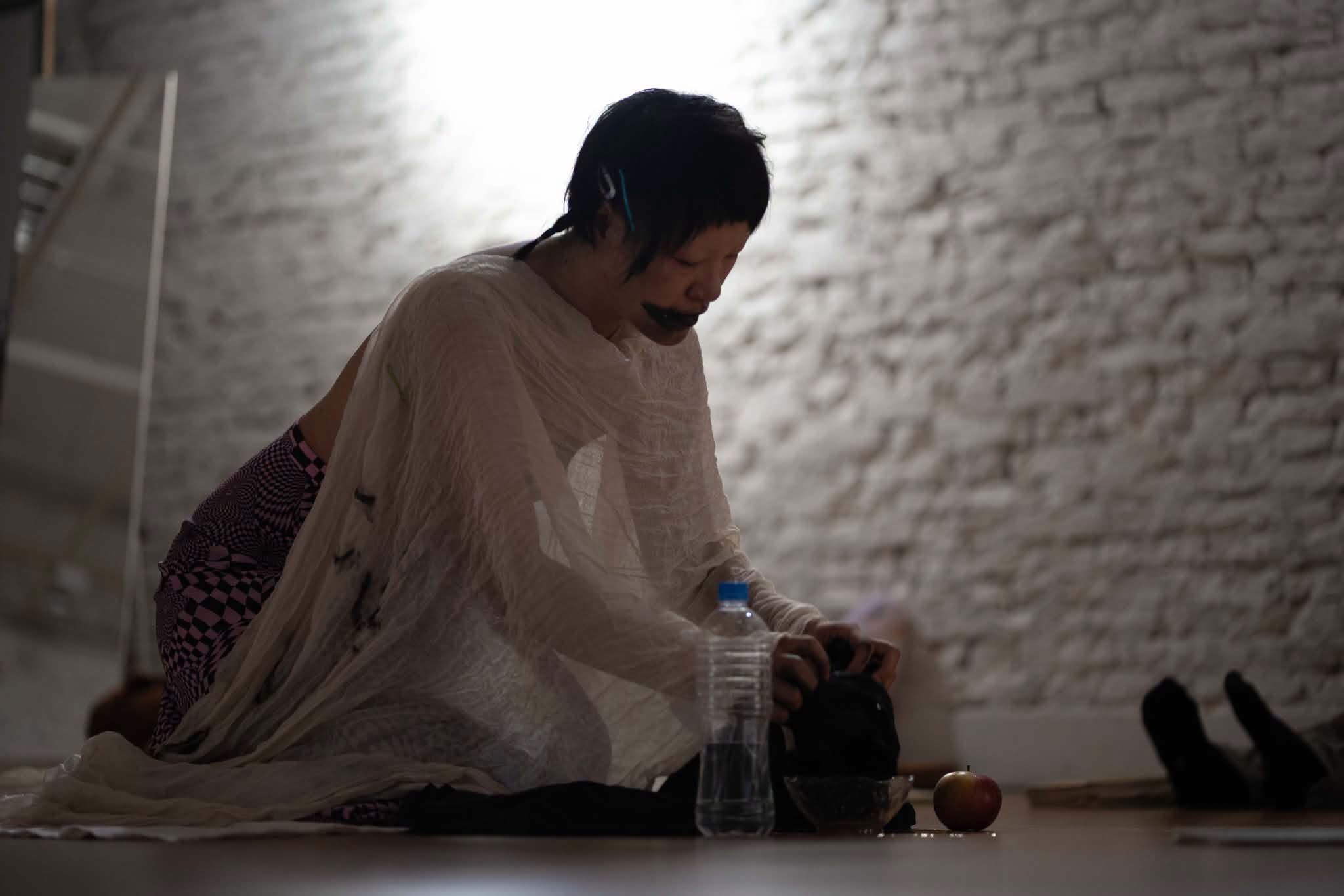
Goodie Guanyin (Chiou Jing-Wen) | Performer
In the summer of 2024, Chiou Jing-Wen began Goodie Guanyin, a project that works through upcycled old clothing and the body to explore yet-undefined relationships between people and objects, and between people and communities. Her hope: to remain an amateur forever!
Current projects: theater performances | upcycling travels | costume making | community teaching | commissioned upcycling of sentimental clothing | Marvelous Upcycling Gatherings (unconventional workshops)
Chiu Pin-Hsueh | Lighting Design
Born in Changzhi, Pingtung, Chiu Pin-Hsueh writes plays, illustrated books, and picture books, and also works as a theater lighting designer. A former adjunct lecturer at a university of science and technology, Chiu has long been engaged in theater-making and Hakka cultural fieldwork. The plays Lost Forest and The Residents of the Upper-Bunk Prairie won first and second prizes in the Taipei Performing Arts Center’s children’s play script awards in 2022 and 2023. In 2024 Chiu was selected for the Ministry of Culture’s award for emerging picture book and illustrated book creators, and in 2026 received the Ministry of Culture’s grant for young artists.
Credits
Weavers / Co-creators & Performers|
Upah Tali, Lomuy Tali, Yuma Taru, Lin Shu-Li, Yuri Abaw, Kagaw (Yen Ching-Chun), Rimuy Lorsing, Lungah Baunay, Bawxin Suyan, Enah Panay Mulani’, Selep Ljazunglung, Goodie Guanyin (Chiou Jing-Wen)
Co-creating Director | marang aly
Cultural Advisor | Yuma Taru
Lighting Design | Chiu Pin-Hsueh
Sound Design | Lai Wei-Yu
Co-Curators | Jo-Yu Hsu, I-Wen Chang
Producer | Karina Yang
Production Manager | Jing Wan-Chi