
Curator: Manray Hsu
Curatorial Statement, 2026
Taoyuan is home to Taiwan’s largest urban Indigenous population, some 91,000 people. In the generations since the Second World War, Indigenous identity has no longer been bound to the home village. As industrialization and urbanization swept across Taiwan, people left their communities for nearby towns and distant cities: to earn a living, to study, to marry and raise children, or to cross the ocean in search of work and their dreams. For those who left, the settlement and land-reclamation policies that colonial rulers pursued before and after the war often made the city the best option they had. The city promised hope, but it was also a place of oppression and discrimination, and an increasingly atomized one, where each person became a windowless monad. Yet through mutual aid, family ties, and alliances rebuilt within and across peoples, survival and the memory of home became that generation’s shared condition. Living both here and there, the first generation of urban Indigenous people created a third space of entanglement. Their children and grandchildren are now weaving paths of their own.
Migration did not end the search for identity. Ceremonies, the myths and stories carried in language, and the spirits held in crafts and artworks still connect each new generation to the dwellings of the ancestral spirits, even as every person must weave a path of their own, tangled in life’s hardships and uncertainties. How do people from different peoples and communities hold ceremonies together in a shared city? And if a “joint ceremony” exists only because of state policy, as with the combined Harvest Festival, who decides what it means?
If the first generation of urban Indigenous people planted the seeds of these dwellings, their descendants now inherit them: the second and third generations, and the generation that has come of age since the Indigenous movement of the 1980s. Taiwan’s rapid development has shrunk the distance between city and village almost magically, until it is hard to say who is “urban Indigenous” and who is a child of the village. All of them are called Indigenous. What, then, shapes their identity? What is life like for today’s “Indigenous” people (a word that now needs quotation marks), and for anyone unsure of where they come from? In Taiwan and elsewhere, some people are eager to claim the label “Indigenous,” even as prejudice persists. What does “Indigenous” mean today?
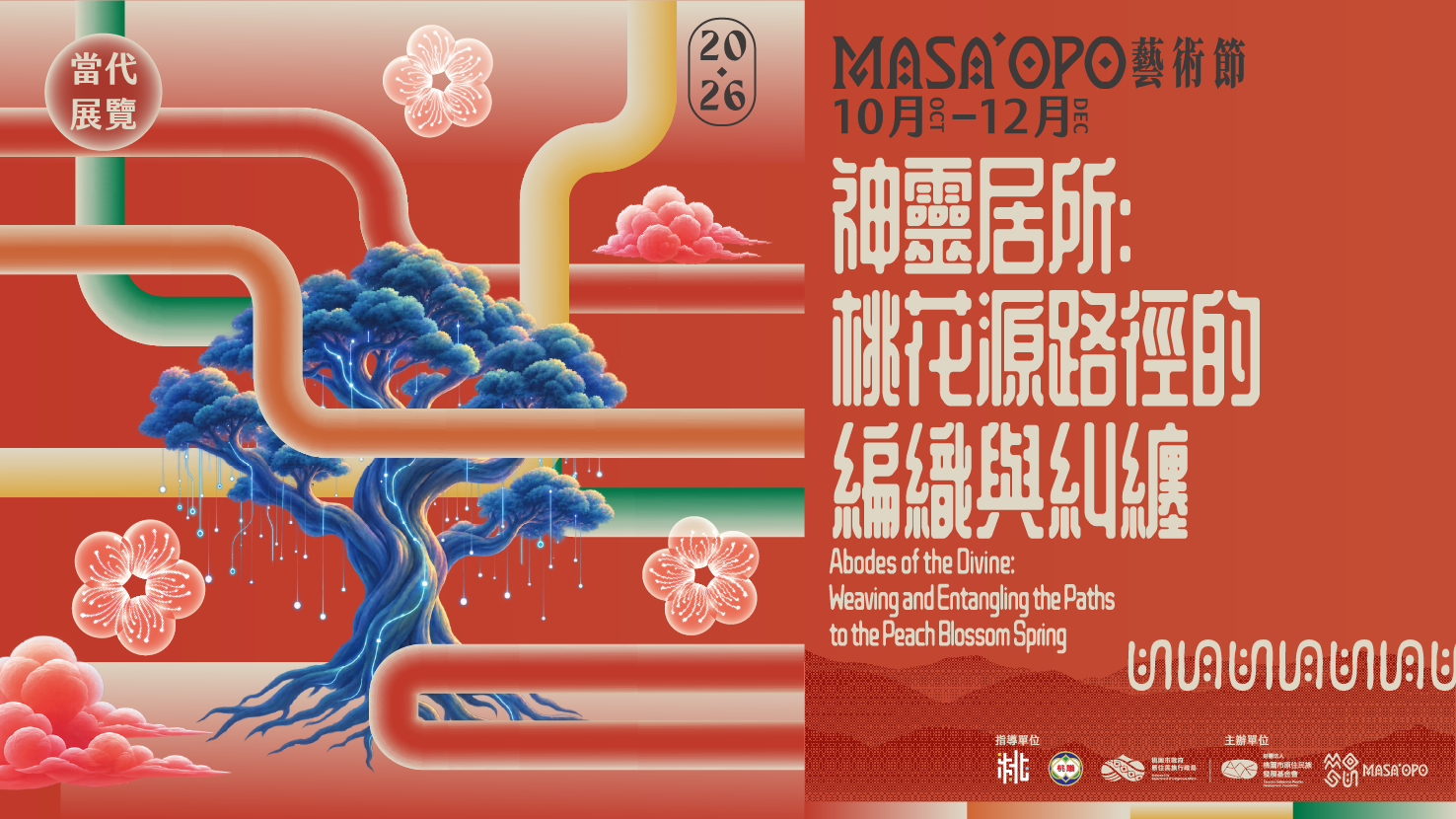
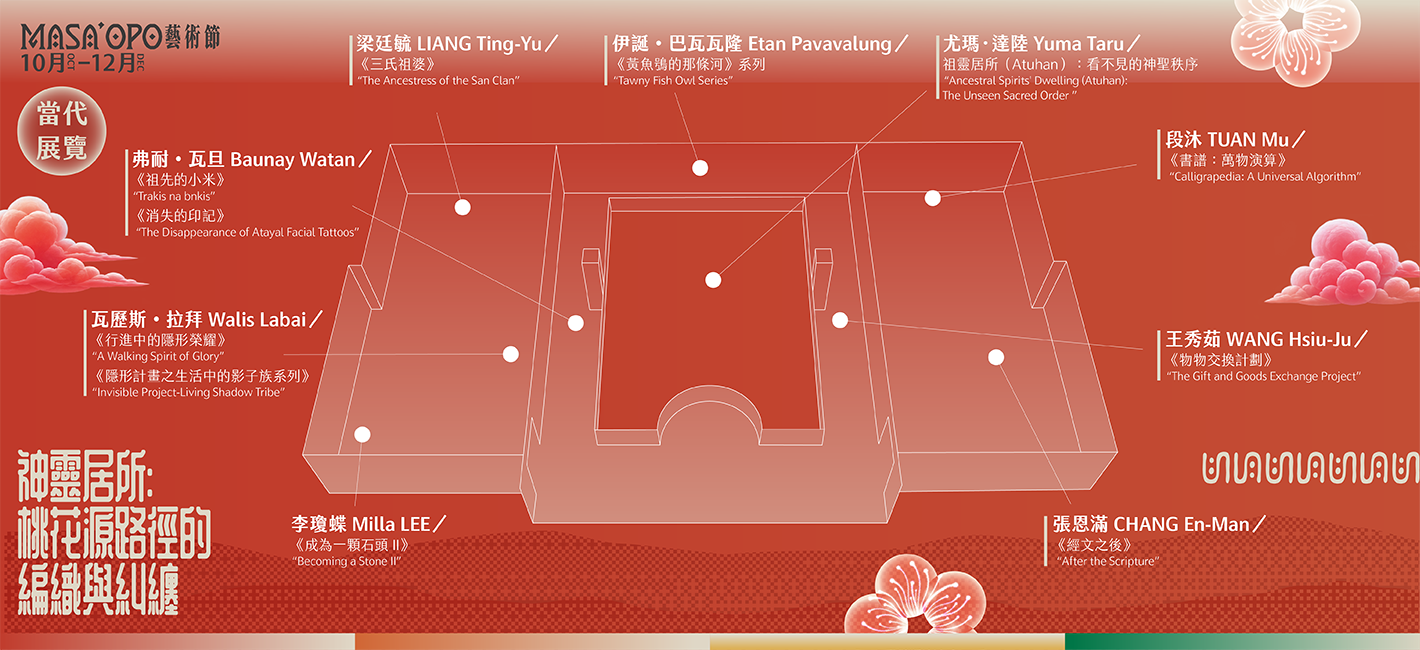
Dwellings of the Spirits: Woven and Entangled Paths to Peach Blossom Land, curated by Makatao curator Manray Hsu, brings together nine contemporary artists of different peoples and generations: Yuma Taru (Atayal), Baunay Watan (Atayal), Walis Labai (Seediq), Etan Pavavalung (Paiwan), Chang En Man (Paiwan), Milla Lee (Amis), Tuan Mu (Siraya), LIANG Ting Yu (Taokas), and Wang Hsiu Ju (Han and Babuza). Working in painting, film, installation, performance, woven sculpture, community interviews, and AI-generated images, they trace the search for Indigenous identity after urbanization.
Seen this way, the exhibition opens up the whole of Taiwan’s Indigenous history, and the modern urban experience becomes only one point of reference. For Taiwan’s Indigenous peoples, settler colonialism began in the seventeenth century, when the peoples of the western plains came successively under Spanish, Dutch, Tungning, and Qing rule. Their descendants are known today as the Pingpu (平埔) peoples. How do their lives compare with those of today’s urban Indigenous youth? Some artists may have become Indigenous through intermarriage, yet their histories differ so widely that they can hardly be compared. No artist here can be read from a single perspective, or even two; each work asks to be seen from many angles. This is the condition of Indigenous exhibitions in the twenty-first century: homeland and city, globalization and ethnicity, technological change and ecological transformation, myth and ritual, individual lives and changing times. Together they make it impossible to answer “Who is Indigenous?” from any one position, or even several. The old colonial division between “plains” and “mountain” peoples (pingpu and shengfan), long held by government and society and frozen by a rigid view of history, no longer holds.
Perhaps, and this is our hope, a time will come when race, skin color, language, culture, ritual, place, gender, and faith no longer serve as political labels that divide us, but become shared ground for valuing difference.
The highest hope for an exhibition like this is to bring into view the complex journeys that Indigenous individuals and peoples, in Taiwan and around the world, have taken through modern history: lives very different from most people’s, yet overlapping with them. Much of what you will see draws on the depiction and storytelling at which contemporary media excel. But as art has always shown us, it is best at conveying the differences and emotions of individual lives, the mood of an era, and the subtle shades in between. As viewers, we can hear the quiet messages in these works only if we open ourselves and listen closely. Those messages may have little to do with who is or is not Indigenous. Instead, we might ask: what does this myth, or that revelation, have to say to me?
Artists and Works
Yuma Taru
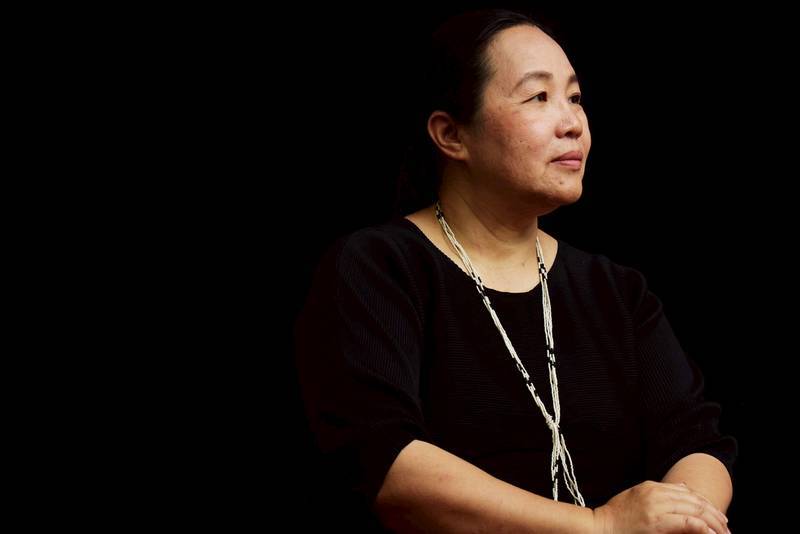
About the Artist|
Atayal artist Yuma Taru is from the Maytayax (Da’an) community in Miaoli. For many years she has worked to revive Atayal dyeing and weaving and to carry it into contemporary forms. Through extensive fieldwork, she has brought back lost processes, from growing plants and spinning yarn to dyeing and weaving. In 2016, the Ministry of Culture added her to Taiwan’s register of “national living treasures,” recognizing her as a preserver of Atayal dyeing and weaving. Her Lihang Workshop supports the local economy and has trained many women weavers, bringing Atayal weaving back into everyday life. In recent years, she has turned her people’s philosophy into contemporary installations that have been shown at major international exhibitions, including the Gwangju Biennale, the Asia Pacific Triennial, and Biennale Jogja. She has also led community weavers onto the runways of Austronesian fashion shows, taking Atayal weaving to the world.
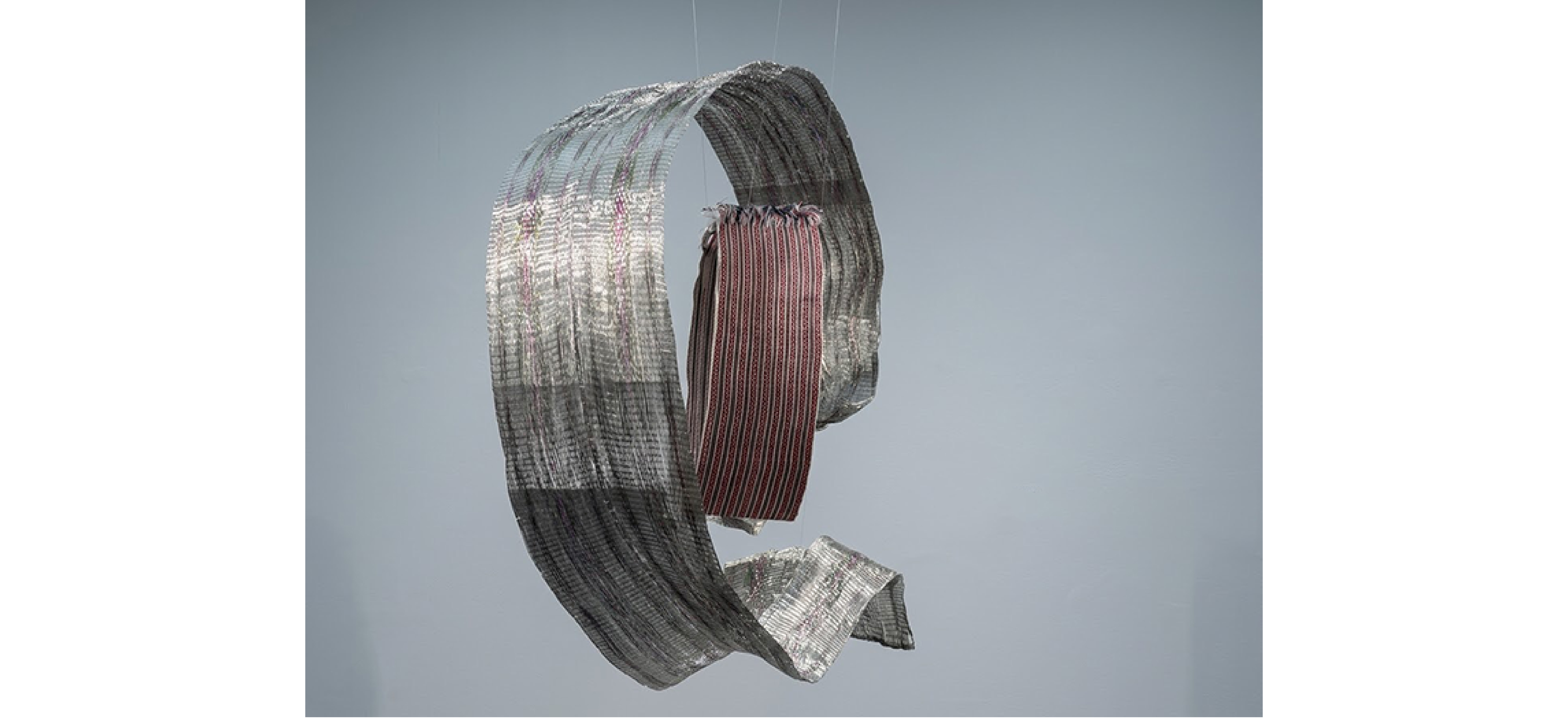
Ancestral Spirits’ Dwelling (Atuhan): The Unseen Sacred Order
Materials |ramie, yarn of ramie and cotton, steel wool, metallic yarn
Dimensions |Variable
Year|2026
About the Work|
This work grows from the Atayal idea of Atuhan, the dwelling of the ancestral spirits. In Atayal belief, the ancestral spirits (Utux) have no form or body. They are everywhere, yet they cannot be touched. To make this unseen world visible, the artist moved away from natural fibers as her core material and turned to stainless steel and transparent materials. The cold shine of the steel and the clarity of the transparent surfaces catch and bend the light, creating a space that feels both solid and dreamlike. Circles of different sizes, layered one over another, stand for the cycles of nature, a life lived in full, and the gathering power of the ancestors. As light and shadow shift, viewers are invited to sense a sacred, timeless gaze that reaches beyond the material.
Artist’s Statement
This work steps outside the familiar frame of “ethnic craft.” It speaks in the language of contemporary industrial and transparent materials, to show how traditional spirituality can be felt in modern space.
Giving form to the formless: Stainless steel is hard; transparent materials are pure. Together they shape an abstract image of Atuhan. Transparency suggests the spirits, formless and all-embracing, while steel catches every change of light. Through these materials, the unseen ancestors appear in space.
The circle and the power of gathering: Circles recur throughout the work. In Atayal weaving, the circle stands for the balanced cycle of Gaga (ancestral teachings and ethics) and for the spiral at the origin of life. Woven from traditional fibers, the circles cross one another to form a sacred place of rest.
Finding roots today: The work sets traditional spirituality against cold industrial materials. It does not copy the look of old textiles. Instead, it reaches for the heart of Atayal belief, asking how Atayal people today, in a fast-changing world, can use the language of contemporary art to keep speaking with their unseen ancestors and to affirm who they are.
Walis Labai
About the Artist|
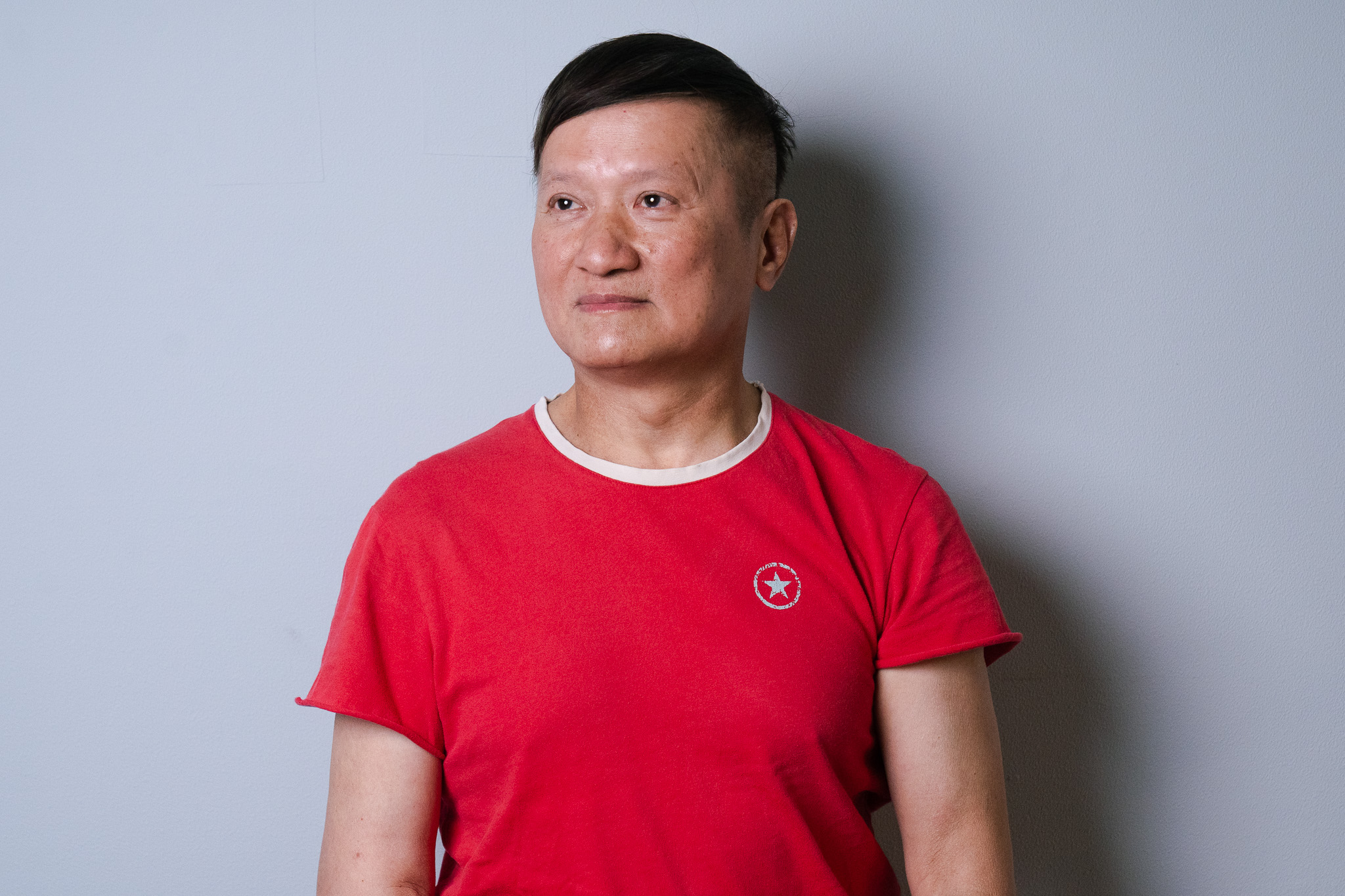
Seediq artist Walis Labai grew up in a family of many intertwined backgrounds. His father, a Kuomintang member, graduated from Northeastern University; his mother is Seediq (Toda). Born Wu Ding-Wu, he took the name “Wu Ding-Wu Walis” during the revitalization movement of the 1980s, became “Walis Labai” in the 1990s, and now goes by “Walis Labai (Wu Ding-Wu).” These layered names trace the complex journey of “return” through which Indigenous people search for themselves and their identity. For the past twenty years, his practice has focused on new media. He digitally retouches and composites historical images, uses lenticular technology to blend plants, rocks, and people into conceptual hybrids, and projects simple images onto remote forests, riverbanks, boulders, and cliffs.
A Walking Spirit of Glory
Medium| Single-channel video
Duration |1 min 50 sec
Year |2022
About the Work|
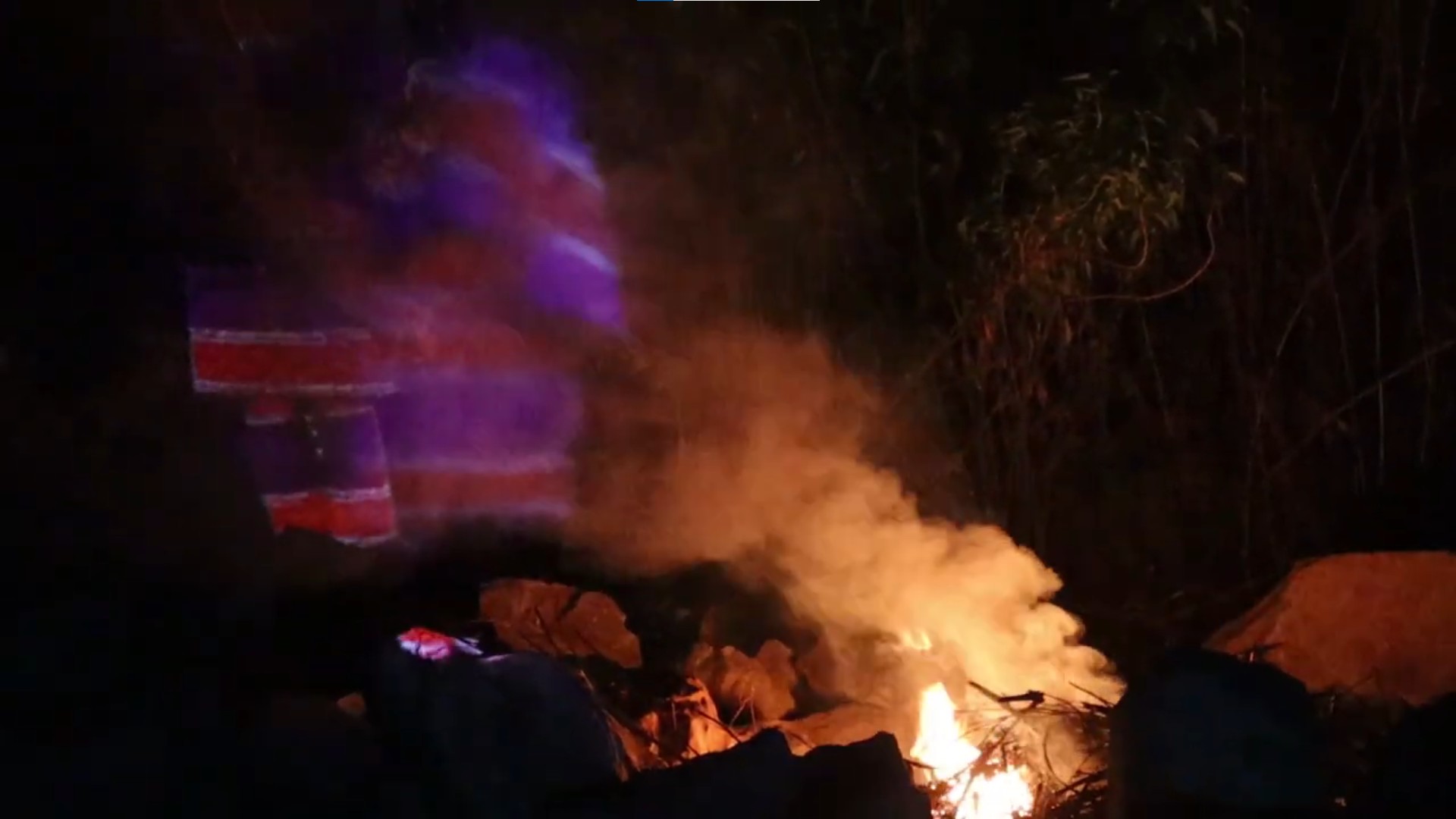
A Walking Spirit of Glory
For A Walking Spirit of Glory, the artist turned photographs of his maternal grandparents into lenticular images, continuing his Invisible Project. The series works on two levels. First, it points to how colonial traditions pushed real lives out of sight. Indigenous people appeared only in anthropologists’ collections and writings, as a “people without history” who had merely “been here,” while everyday discrimination (microaggressions) passed trauma down the generations. Second, it recalls the animist beliefs of Indigenous peoples around the world, lived out in daily ritual and in origin myths of harmony among people, ecosystems, and other species. As Indigenous peoples fade from view, the ecological wisdom that our global environmental crisis so badly needs is slipping out of everyday life.
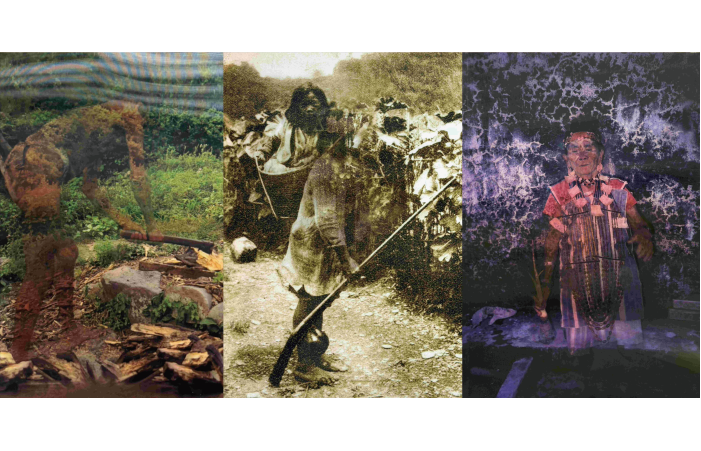
Invisible Project-Living Shadow Tribe
Invisible Project-Living Shadow Tribe
Medium| Digital print, lenticular sheet
Dimensions|150 × 90 cm, set of three
Year|2006
The Invisible Project looks at old photographs through lenticular sheets, treating the portrait as a question of existence. An old photograph already raises a doubt: is what “once was here” still here? The lenticular images, in which faces vanish and remain at once, make that doubt sharper. The work is interactive: where viewers stand decides whether a portrait appears or disappears. Caught between presence and absence, the images feel like a space of spirits. They speak of the crisis their subjects faced, the loss of their people and of practices such as tattooing, traditional dress, and weaving. The series questions whether its subjects still exist, while also reflecting the harmony between people and their surroundings that the photographs once held.
For Living Shadow Tribe, the artist used existing old photographs, most of them taken outdoors: people hunting, carrying firewood, or standing outside slate houses, framed by sky, earth, and everyday things. Using digital tools, he removed the people and left only their shadows, throwing each scene strangely off balance. Without people, a living place loses its meaning and becomes a ruin. The flickering figures in the lenticular images appear only when viewers move and change their angle. Through these images that keep slipping away, the series reflects the situation of minority peoples today.
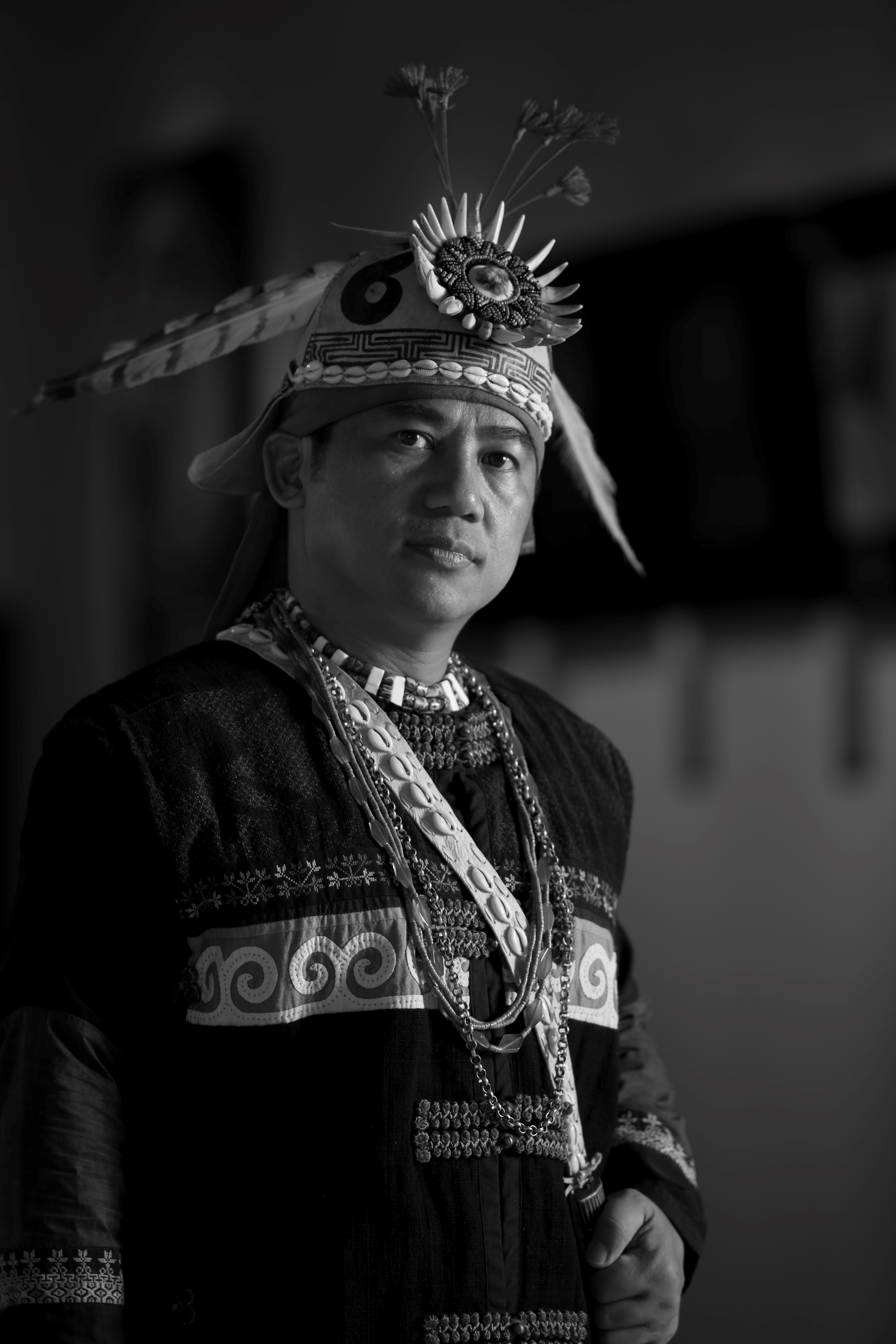
Etan Pavavalung
About the Artist
Etan Pavavalung is a Paiwan artist born in the Tavadran community, Sandimen Township, Pingtung. His practice spans poetry, prose, graphic design, painting, woodblock carving, installation, and documentary film. His artistic awakening came during the Indigenous movements of the 1990s, including the Return My Land and Return My Name movements. For these movements, he designed posters and T-shirts featuring the lily, a symbol of his people’s spirit, hoping to offer an image of redemption and rebirth for Indigenous identity. As a documentary director, he has made films including She With the Patterned Hands, Hands that Tell Tales of the Mountains, Brothers Who Sing of Love and Longing, The Fragrant Mountain Winds, and Mountain Tribe, Sea Tribe, seeking a distinct Indigenous film aesthetic through a literary, poetic lens.
Through meticulous detail and bold color, his visual art conveys both a literary vision and a contemporary sensibility. His recent style, which he calls vecik (a Paiwan word for patterns, images, and lines), is known as a “trace, layer, carve, paint” (紋砌刻畫) technique. It has been shown in Japan, Australia, Hong Kong, Poland, Norway, the United States, and Thailand, and in Taiwan at the National Taiwan Museum of Fine Arts and the Taipei Fine Arts Museum. He draws on the enduring “patterns” held in the land, the forests, and all living things, and on the “layered” stone of slate houses. He “carves” these into lines with a chisel, then “paints” them in the colors of the changing seasons. In this way, his works meet ancient wisdom and enter into dialogue with Christian ecological theology, in search of inner harmony and an aesthetic of rebirth.
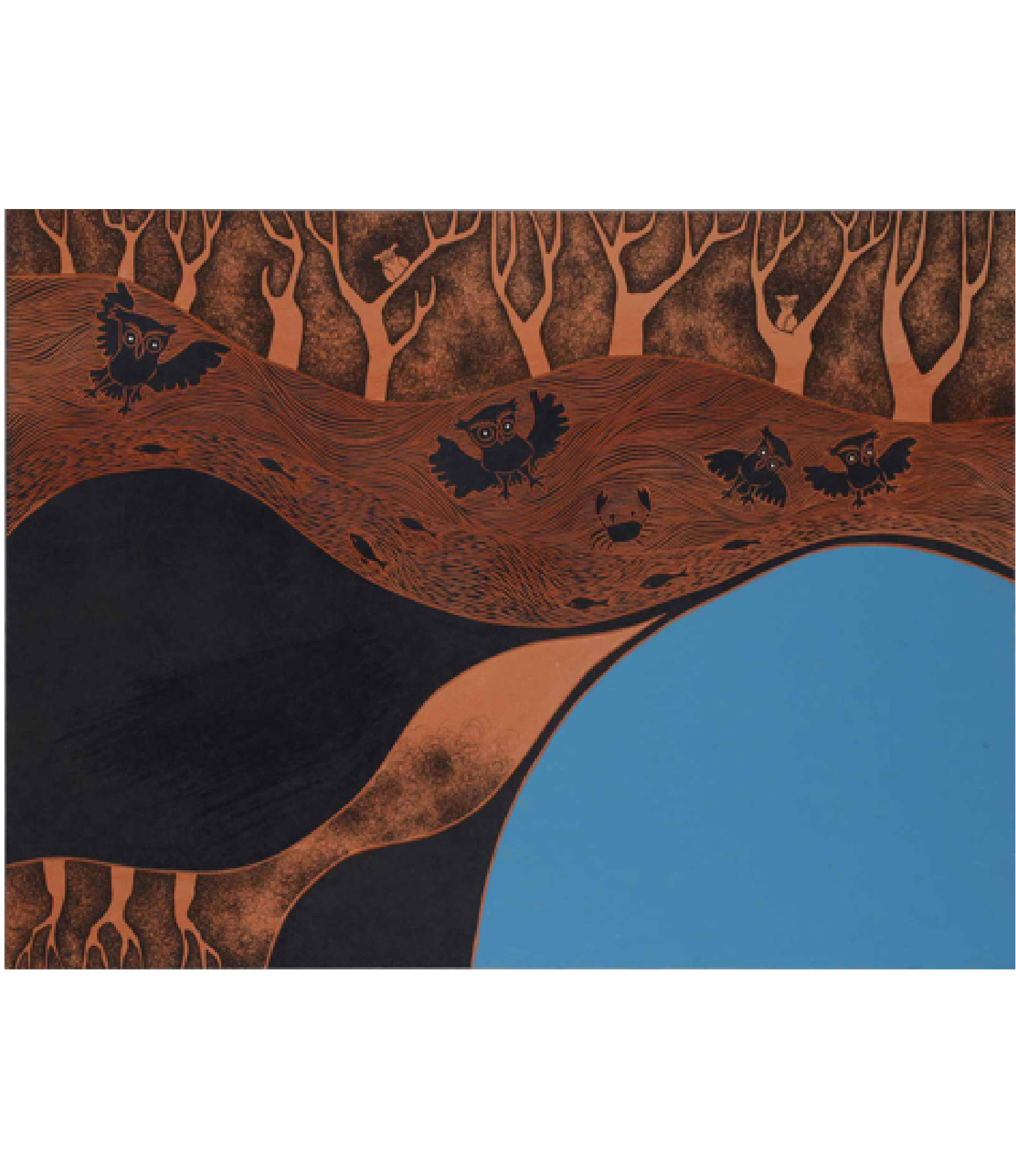
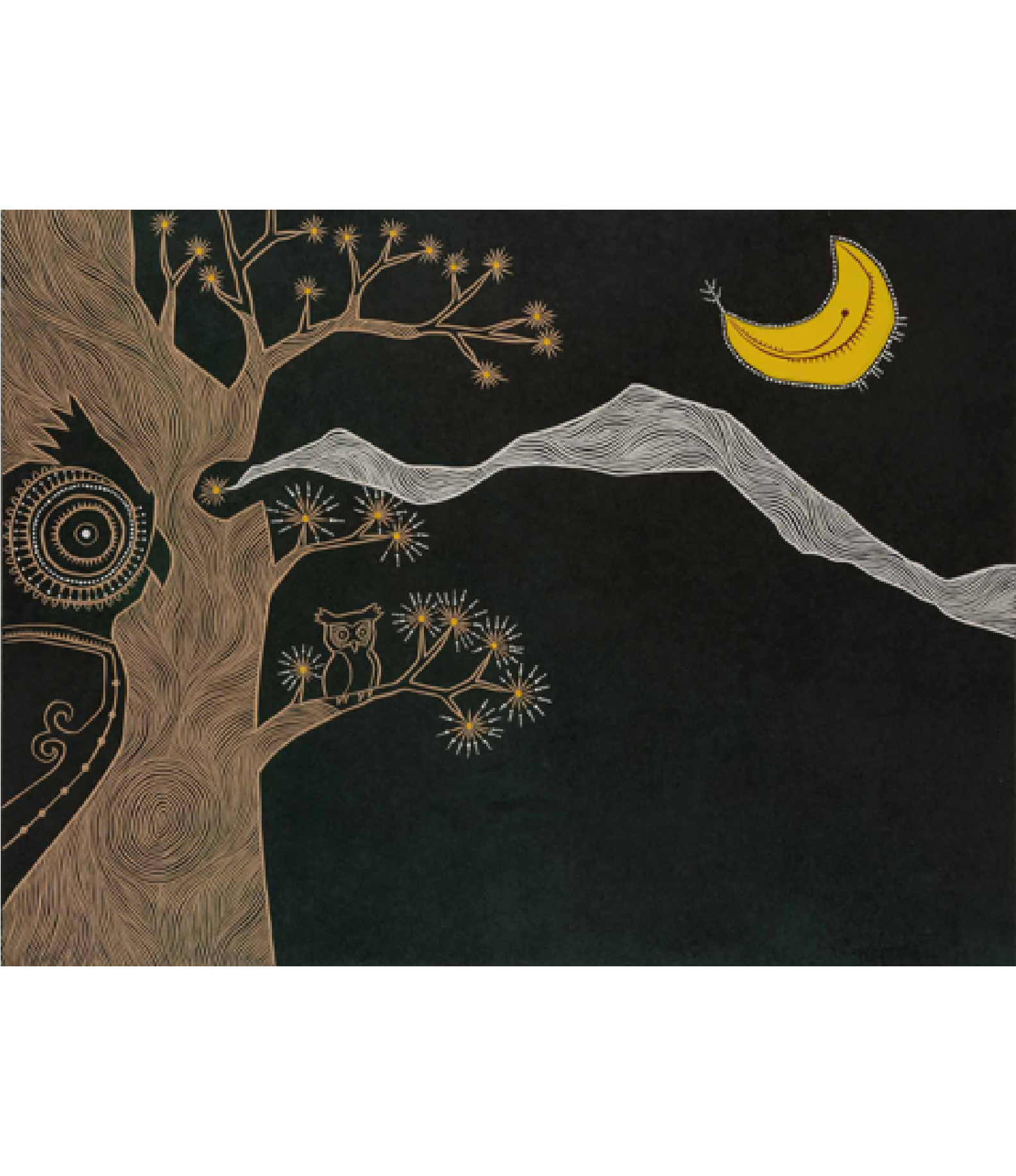
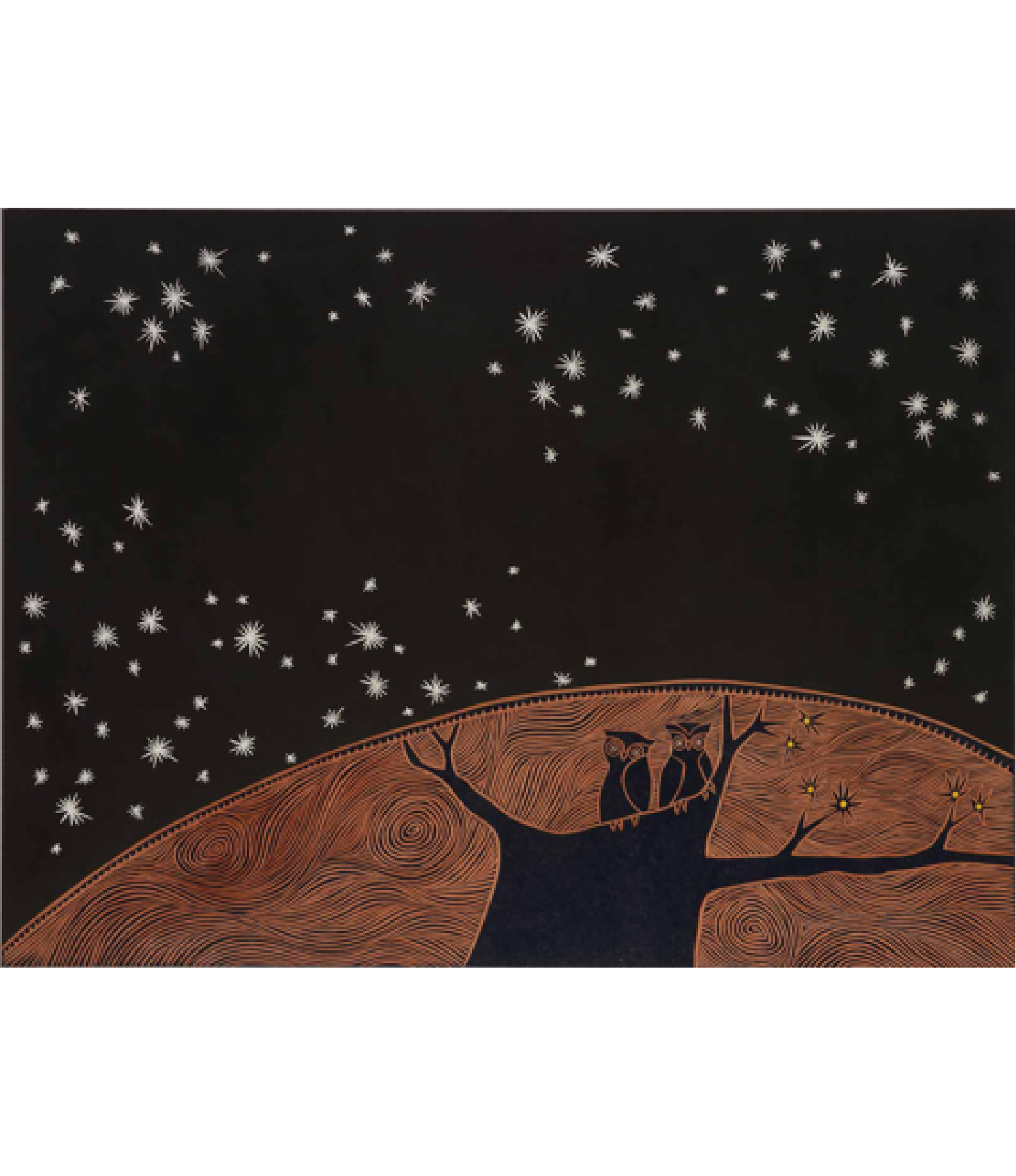
Tawny Fish Owl Series
Media|Wood / Print Pigment / Acrylic Paint
Dimensions|80 × 100 × 5 cm, set of five
Year|2017
About the Work|
The Tawny Fish Owl and the Brook Where It Belongs is an ecological picture book created by Paiwan artist Etan Pavavalung and writer Wang Ching-Lung. Etan’s signature vecik style gives this story of Taiwan’s land and wildlife a deep spirit and striking visual force. The story is grounded in more than twenty years of field research by Professor Sun Yuan-Hsun of National Pingtung University of Science and Technology. It is spring in a river valley in Taiwan’s Xueshan Range. A pair of tawny fish owls, Taiwan’s largest owl and a rare protected species, take turns feeding and guarding their two newly hatched chicks against the harshness of nature.
The family survives bitter cold snaps, days of heavy rain, predators, and the howling winds of a typhoon. With their parents’ patient care and training, the fragile chicks learn to walk, to fly, and to hunt, until at last they set off on their own as graceful “masters of the stream” and “phantoms of the night.” It is a small miracle of life, set among Taiwan’s beautiful but unforgiving mountains, forests, and rivers.
Buanay Watan
About the Artist|
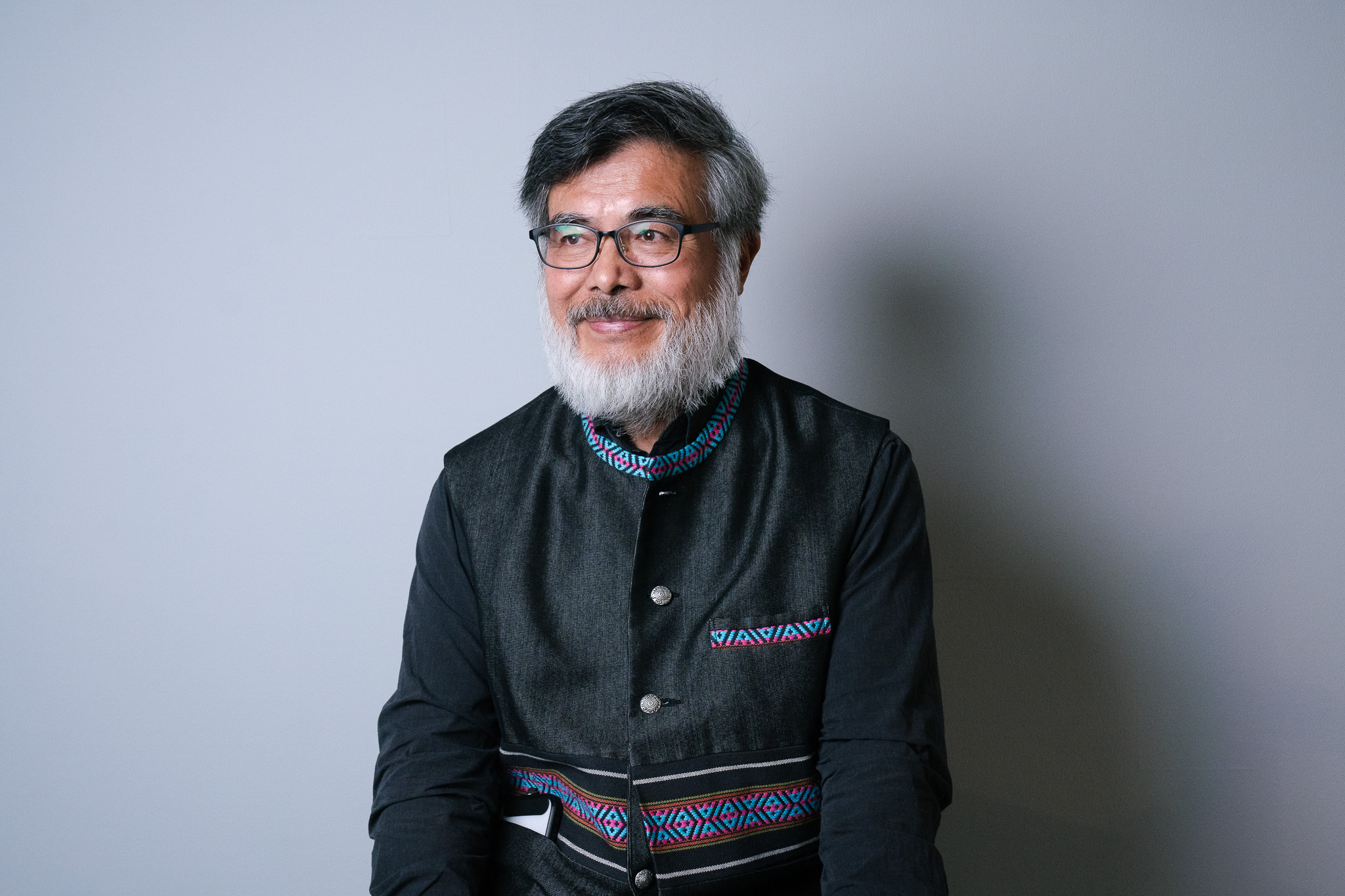
Baunay Watan, whose Chinese name is Lin Wei-Tao, is an Atayal cultural revitalization practitioner and documentary filmmaker. A descendant of the Skaru group, he spent many years away from tribal life until the pull of his cultural identity brought him back to his community. With Bilin Yabu and Yuma Taru, he co-founded the Atayal Liyung Peynux Cultural Association. His work spans community history research, the preservation of traditional architecture, and the promotion of weaving. Filming from within the community, he captures how people strive to protect precious traditional knowledge amid modern change, leaving the Atayal people a rich archive of moving images.
Trakis na bnkis (The Ancestors’ Millet)
Media|Single-channel video; publications on the agricultural rituals of the Atayal Liyung Paynux group
Duration|23 min 27 sec
Year|2003
About the Work
Baunay Watan and a group of fellow Atayal set out to follow in their ancestors’ footsteps and revive customs that had been lost. Through their work, the millet culture of the Atayal ancestors can be passed down for generations, as hard and lasting as stone. Trakis na bnkis is an environmental education documentary made for the Shei-Pa National Park Headquarters.
The Disappearance of Atayal Facial Tattoos
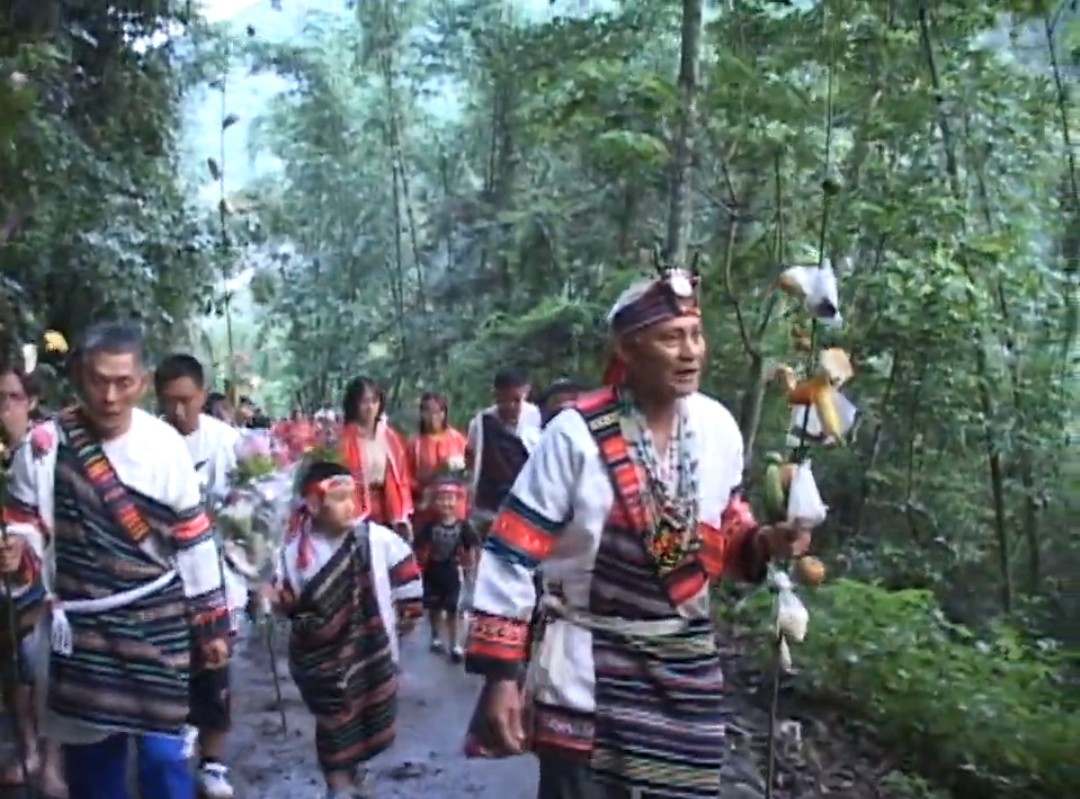
The Disappearance of Atayal Facial Tattoos
Medium|Single-channel video
Duration|41 min 01 sec
Year|2005
About the Work|
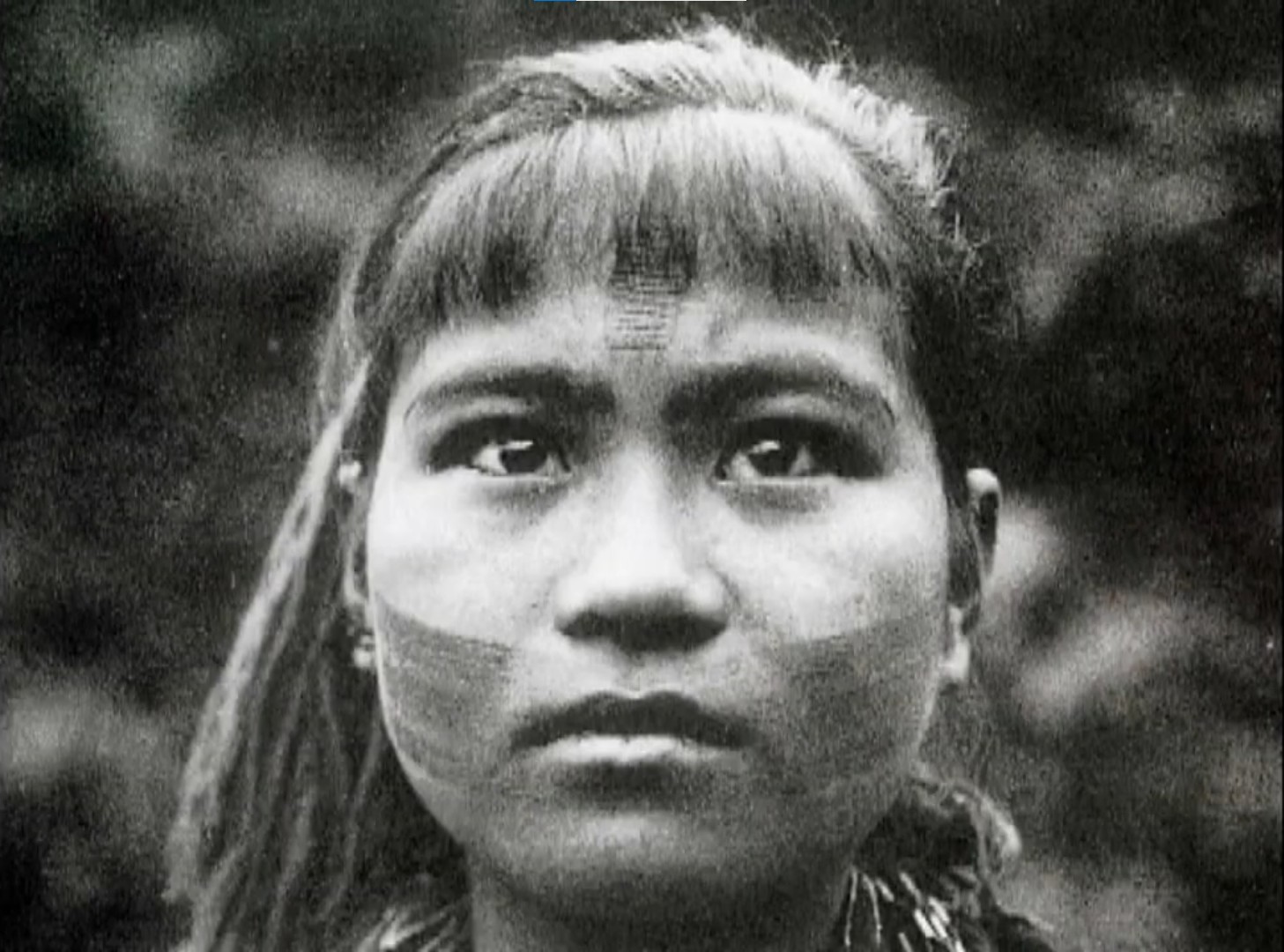
Facial tattoos were a central marker of Atayal identity. In 1920, the Japanese colonial government banned them as part of an assimilation policy that aimed to erase ethnic markers. From then on, facial tattooing, part of being Tayan Balay (a true Atayal), slowly disappeared. The film records the memories of the last tattooed Atayal elders.
Chang En Man
About the Artist|
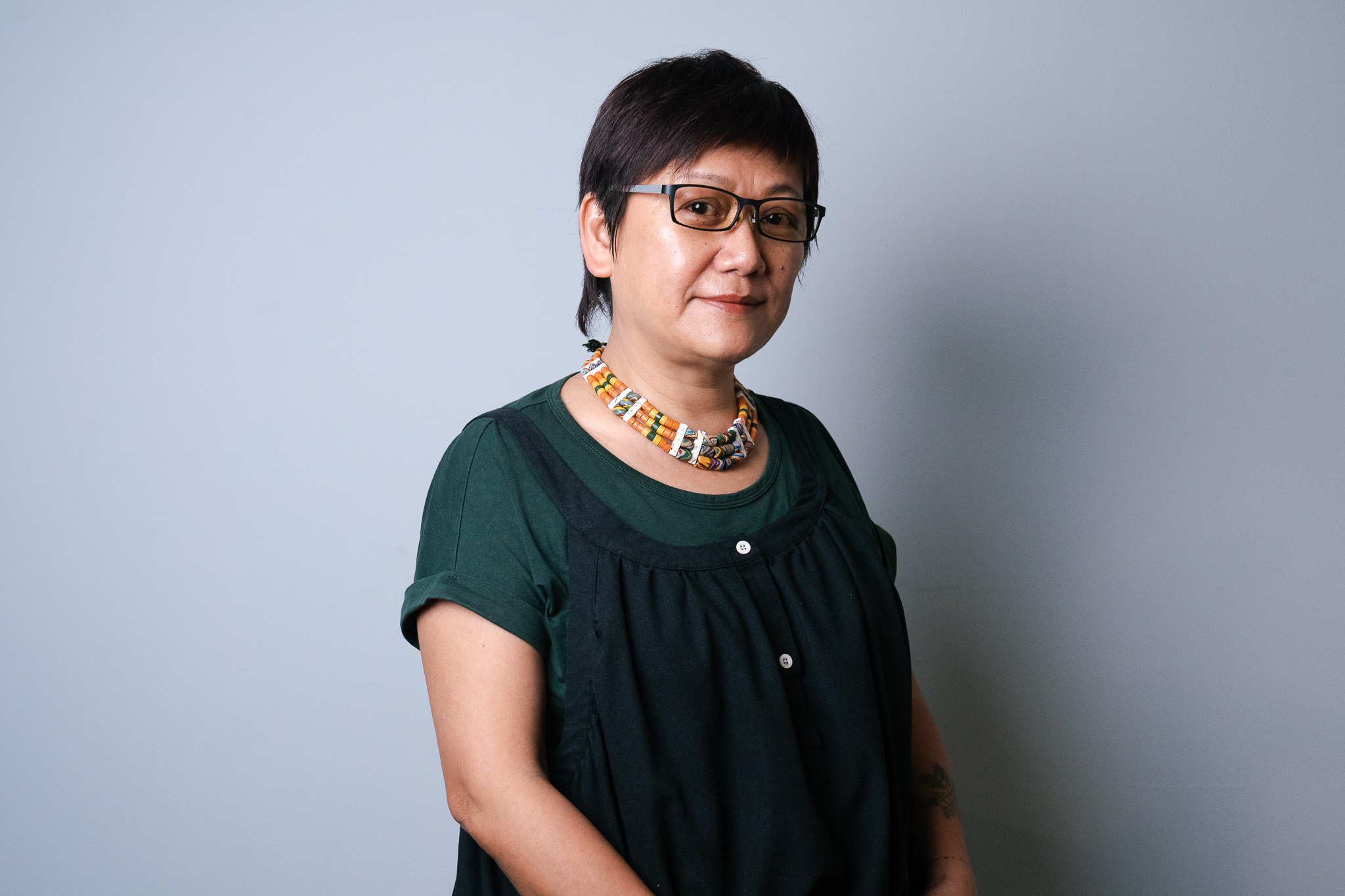
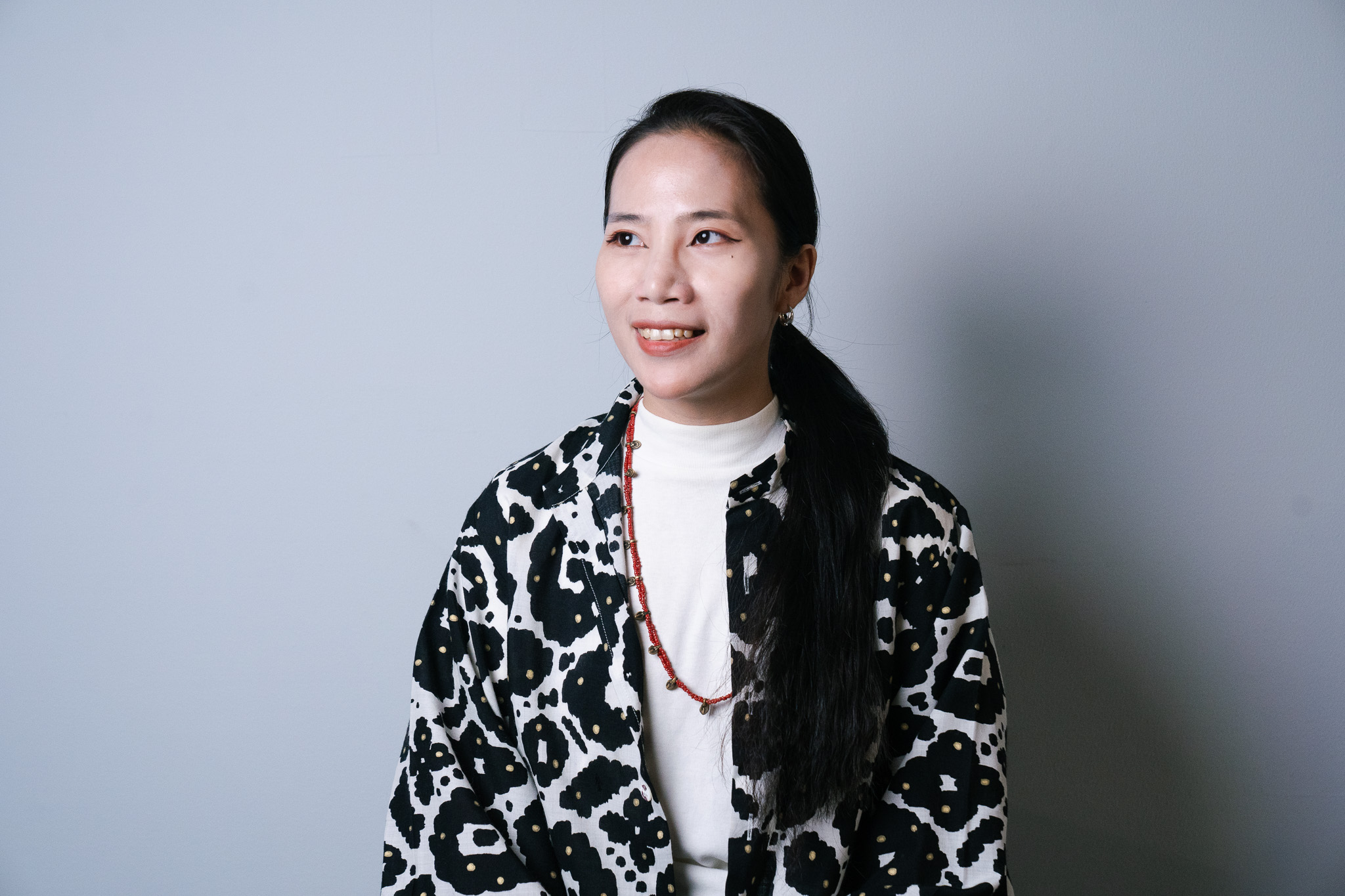
Chang En Man is a contemporary artist of Paiwan descent who grew up in Taipei. Only as an adult did she begin to explore the culture of her mother’s community, Pacavalj (Daniao). Working across moving image, sculpture, performance, and long-term projects, she explores the complex state of ethnic identity under acculturation, diaspora, and marginalization. Her practice is not simply a return to a single community, or a way of belonging to one. It is closer to an ongoing process of moving, seeking, and building relationships. Through fieldwork, art projects, and exchanges with different groups, she works to trace what culture has left behind in the gaps of history and in diasporic memory.
Her work has long asked how Indigenous peoples navigate the pull between identity, cultural change, and everyday reality amid irreversible modernization. Her well-known snail series uses the giant African snail, brought to Taiwan during the colonial period, to rethink the links between introduced species, food culture, migration, and memory. She turns her own questions about identity and cultural belonging into wider social themes. Through seemingly ordinary materials and forms of life, she loosens the public’s fixed, one-dimensional image of Indigenous cultures.
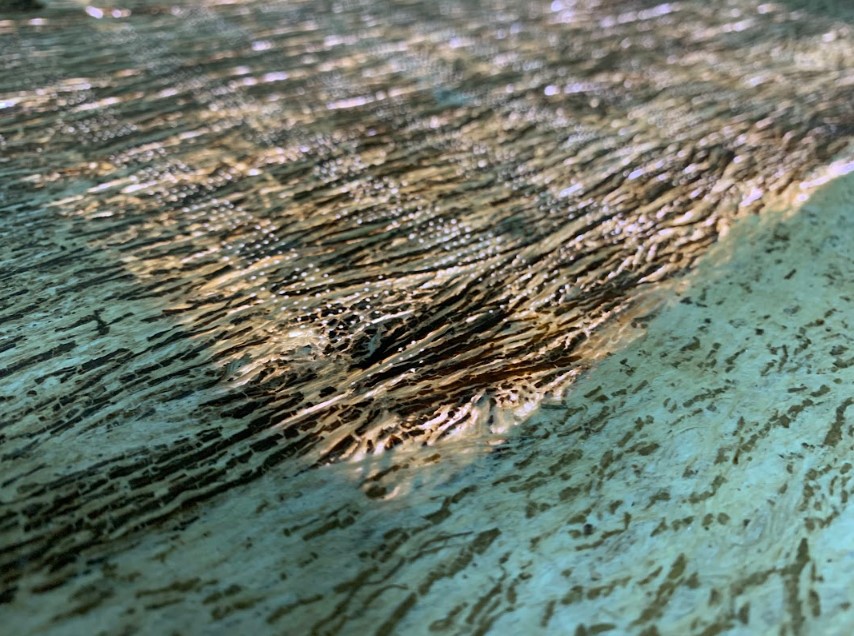
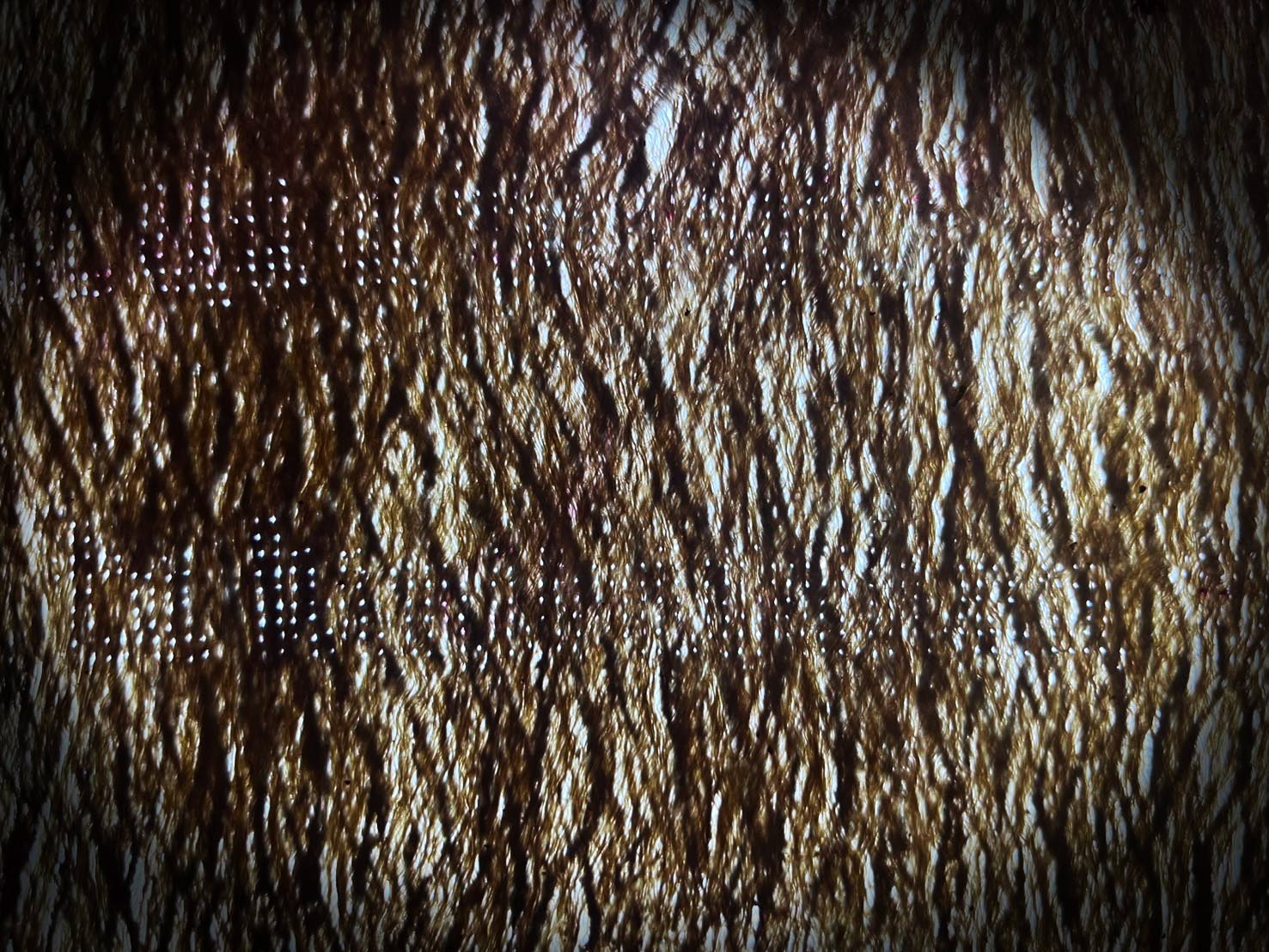
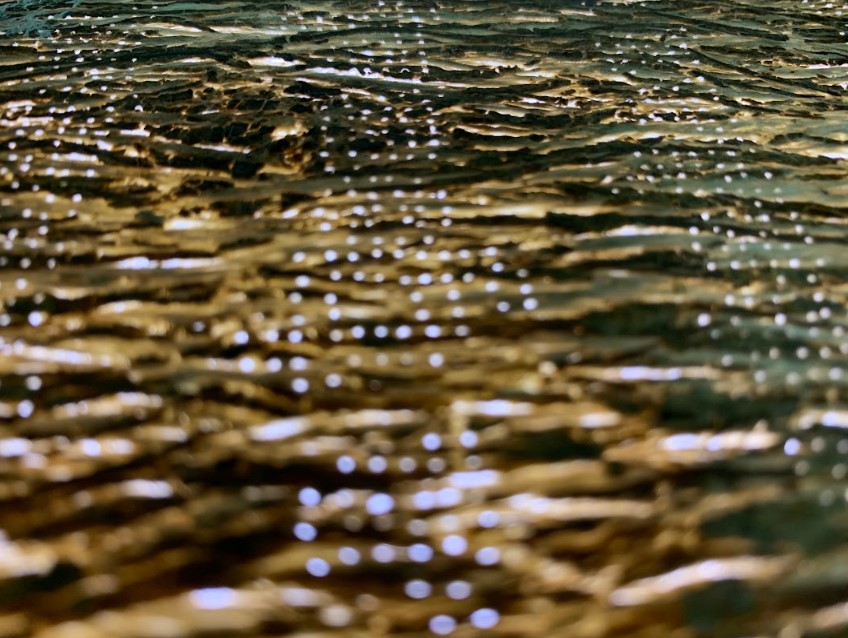
After the Scripture
Media|Paper mulberry bark, lightbox
Dimensions|Variable
Year|2026
About the Work|
Her search for a path continues in her work with paper mulberry bark. She first punched holes in the bark to embroider the characters of a scripture. Along the way, she was surprised to notice how light changed as it passed through the holes. The holes looked like writing, like constellations, like sunlight falling through the forest canopy. The bark became more than a surface for words and memory. Slowly, it turned into a living membrane that light could pass through.
Paper mulberry bark is a key material in Austronesian cultures, and for the artist it has also become a way to sense her mother’s culture. She began with characters and writing, but the material led her beyond the meanings that text can hold. As the words fade, holes, light, and fibers weave together into a field of perception, something close to an “ecosystem of light.” This path, shaped by material, body, and looking, carries on her long-standing question about cultural identity. Culture is not only found in clear symbols. It can also live in light and shadow, in fiber, touch, and memory, and be felt anew as it keeps moving and changing.
Milla Lee
About the Artist|
Milla Lee is an interdisciplinary artist working across performance, installation, and moving image. She is of Amis descent, from the Takidis community in Taimali, and of Indonesian Chinese heritage. She treats the body as the central site of perception and transformation. She has long worked in depth with historical trauma and collective memory, and explores the symbiotic relationship between humans and nature. Her work grows out of a long inquiry into the nature of life. Through it, she responds to the alienation of the bodily senses under the domination of contemporary capital and technology. With a care shaped by decolonial awareness, she seeks to call viewers back into deep connection with the land, with history, and with all things. In recent years she has been active internationally, invited to residencies and presentations in places including Yogyakarta, Indonesia, and Tokyo, Aomori, and Ishinomaki, Japan. In 2025 she received an international exchange grant from the National Culture and Arts Foundation (NCAF) to work in Japan and was a finalist in the Taoyuan Fine Arts Exhibition. That same year, the jury of Cine+Perfo 2025, an international festival of performance art and video performance in Argentina, selected her work for exhibition.
Becoming a Stone II
Media|Moving image, kinetic sound installation, wall-mounted interactive installation,
collected stone specimens, soil, hand-drawn journals, screen-printed maps
Dimensions|Variable
Year|2024–2026
About the Work|
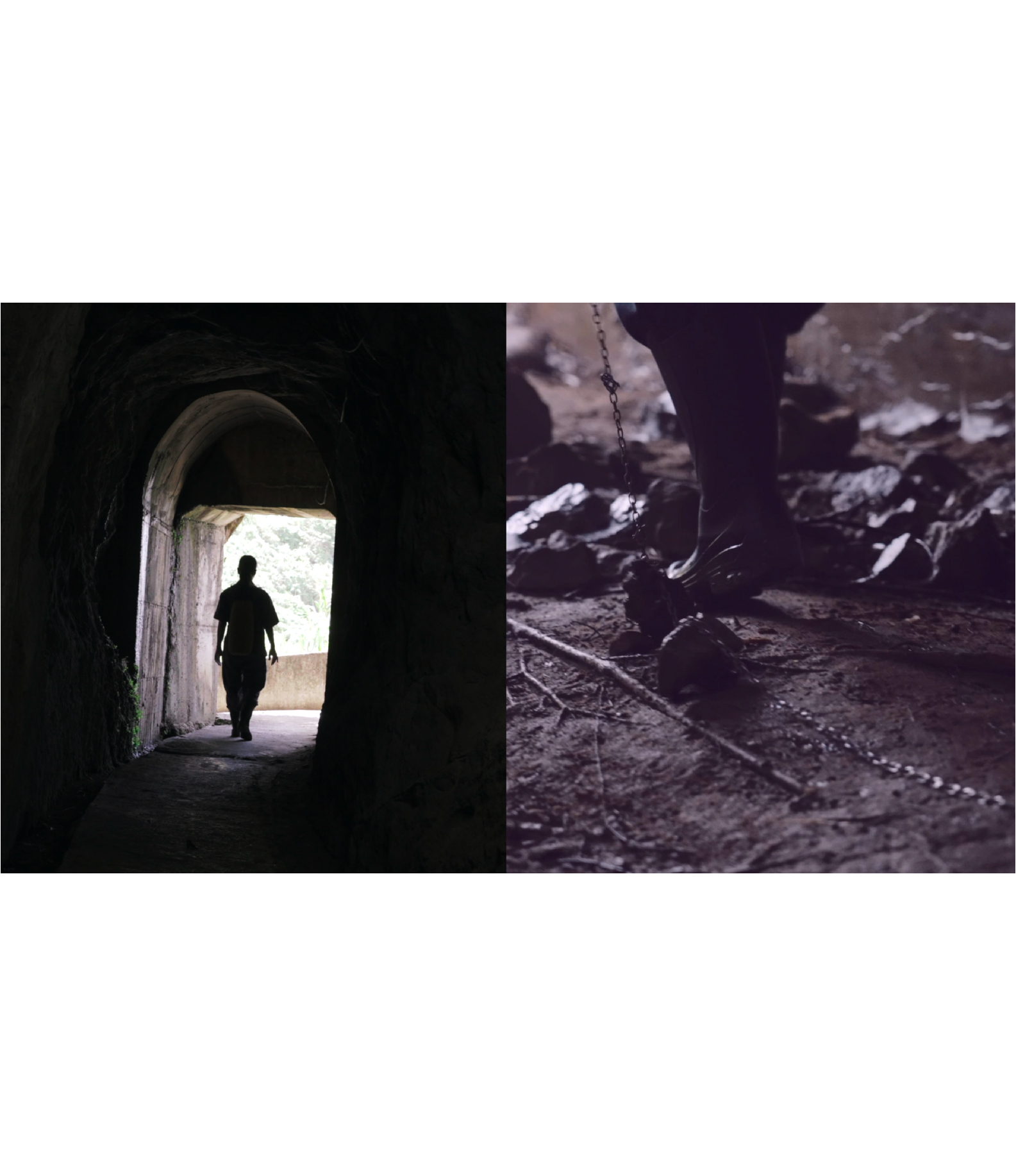
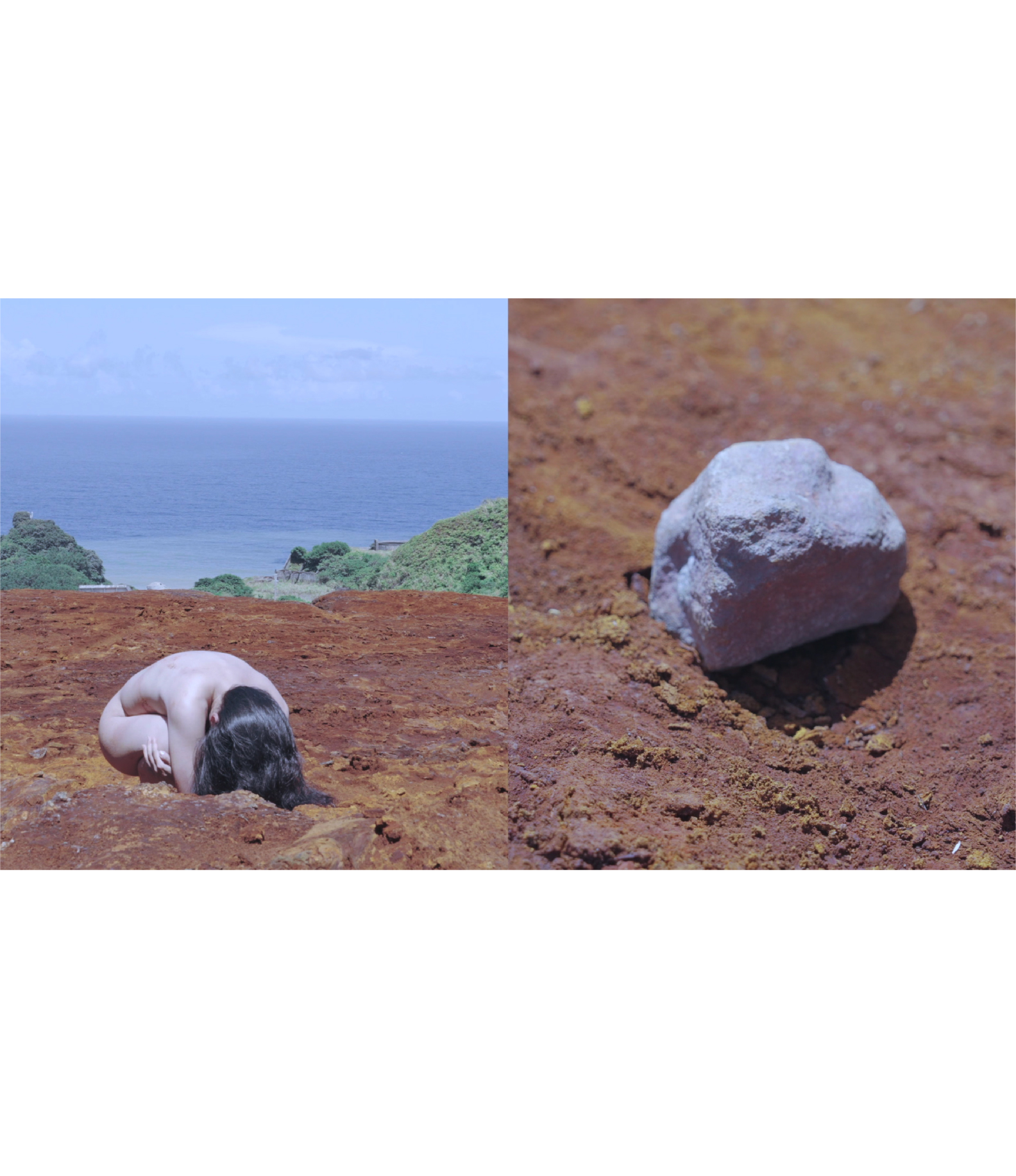
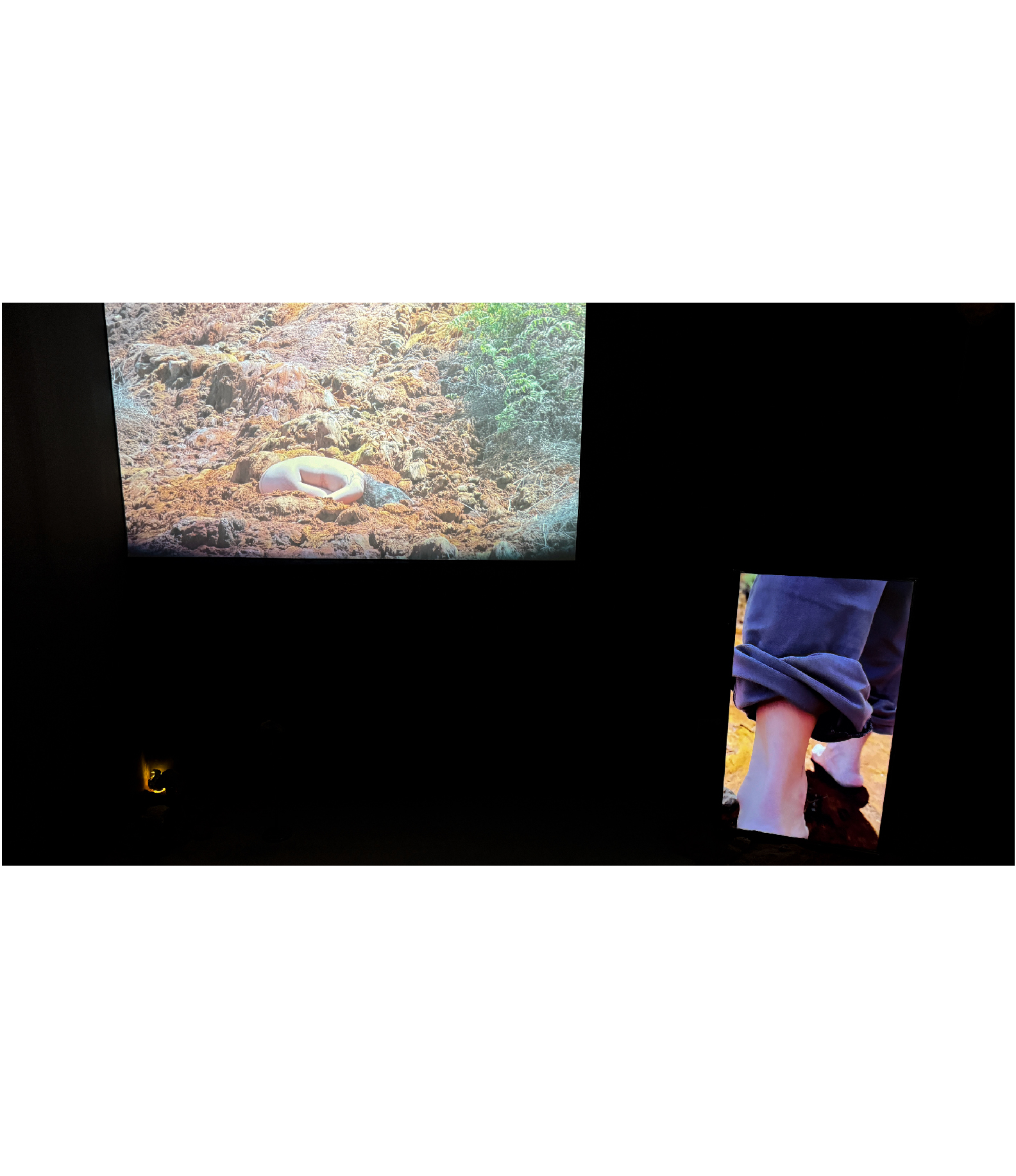
Becoming a Stone II is a long-term performance project centered on the body, stones, and the mining landscapes of Jinguashi and Shuinandong. Past discussions of the area’s culture and history have focused on mining and human rights. This work turns instead to the relationship between people and the natural world. When land and minerals are classified, named, and turned into resources to extract, how do the relationships among people, land, stones, and all things change?
Drawing on her Amis and Indonesian Chinese roots, the artist reflects on how people see and use nature, through ecofeminism, animism, and a non-anthropocentric lens. From her performance Stone to her long-term practice Becoming a Stone in Jinguashi, she walks, day after day, the paths once traveled by miners and ore. By walking, lying down, touching, and keeping silent, she tries to move closer to the time and perception of stones.
In 2026, Becoming a Stone II brings field footage, maps, and traces of her daily actions into the gallery. In a sound installation driven by pulleys and steel cables, stones are struck slowly and seem to sound on their own, calling up the memories and rhythms of the mines. As sound and vibration fill the space, viewers move from looking to touching and listening, feeling the resonance between body, space, and matter. On opening day, the artist will perform Stone live, bringing her body back into contact with stone and asking again: How do stones bear witness to land and history? And how can we learn once more to listen to other-than-human beings?
LIANG Ting Yu
About the Artist|
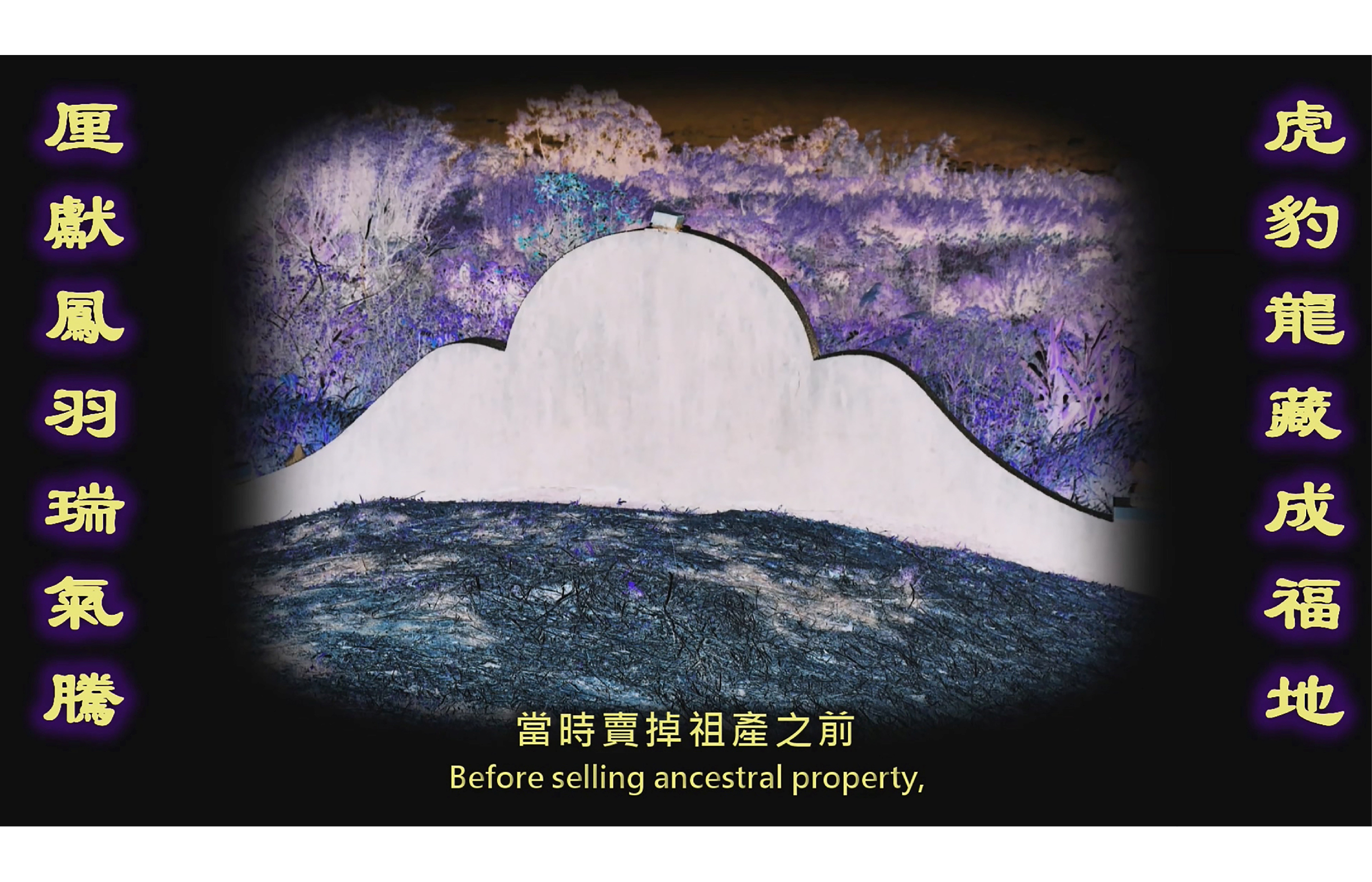
LIANG Ting Yu is a contemporary artist and researcher of Taokas and Hakka descent. For many years, he has studied the history and boundaries of Taiwan’s Pingpu peoples. His practice is research-based. Drawing on fieldwork, archives, oral history, and writing on the ghostly, he links Taiwan’s local tales of ghosts and spirits to forgotten histories of ethnic conflict. He works across moving image, mapping, and academic writing. More than an artist, he is something of an archaeologist of historical taboos, reconstructing memories from the margins that mainstream history has silenced.
The Ancestress of the San Clan
Medium|Single-channel video
Duration|22 min 47 sec
Year|2024–2026
About the Work|
The Ancestress of the San Clan is a moving-image and narrative project that reconstructs the story of a woman in the artist’s own family history: an Indigenous ancestor surnamed San from the Taokas Pocaal (Zhuqian) community. Drawing on the oral histories of local Taokas descendants, the community’s history of displacement, and his family’s past, the work reflects the silenced memories of Indigenous women, who lost their voices under Qing colonial rule and waves of Han settlement. By tracing the community’s migration routes, the artist weaves the ancestress’s life into the larger story of her people’s movement. Revisiting the ghosts and gods, temples, and ancestral halls on the community’s former lands, the work sketches how she lived through a turbulent era when the line between Indigenous and Han was dissolving. She carried a shifting identity, sealed away memories of the land, and kept the maternal line alive.
Tuan Mu
About the Artist|
Tuan Mu (b. 1994, Hsinchu) is a Taipei-based visual artist and independent curator from the Siraya community of Kabua Sua. He holds a master’s degree in fine arts from Taipei National University of the Arts, where he majored in ink painting. His work looks at how the world is organized into an understandable whole as technology, culture, and ecology change. He asks how different cosmologies interact today, and shapes systems of perception through embodied action, narrative, and temporality.
He works with immersive technology, artificial intelligence, moving image, sound, and ink calligraphy. Through poetic, ritual-like structures, he guides viewers back and forth between immersion and detachment. His work carries forward the spatial thinking of the ink painting tradition while using new media as its method. Text, space, and perception are woven into fields of narrative, so that looking itself becomes a negotiation between body and environment. The result is work with a poetic visual rhythm that keeps asking a conceptual question: now that technology is so deeply embedded in our lives, how can we rethink ourselves and our relationship with the world where tradition and technology meet?
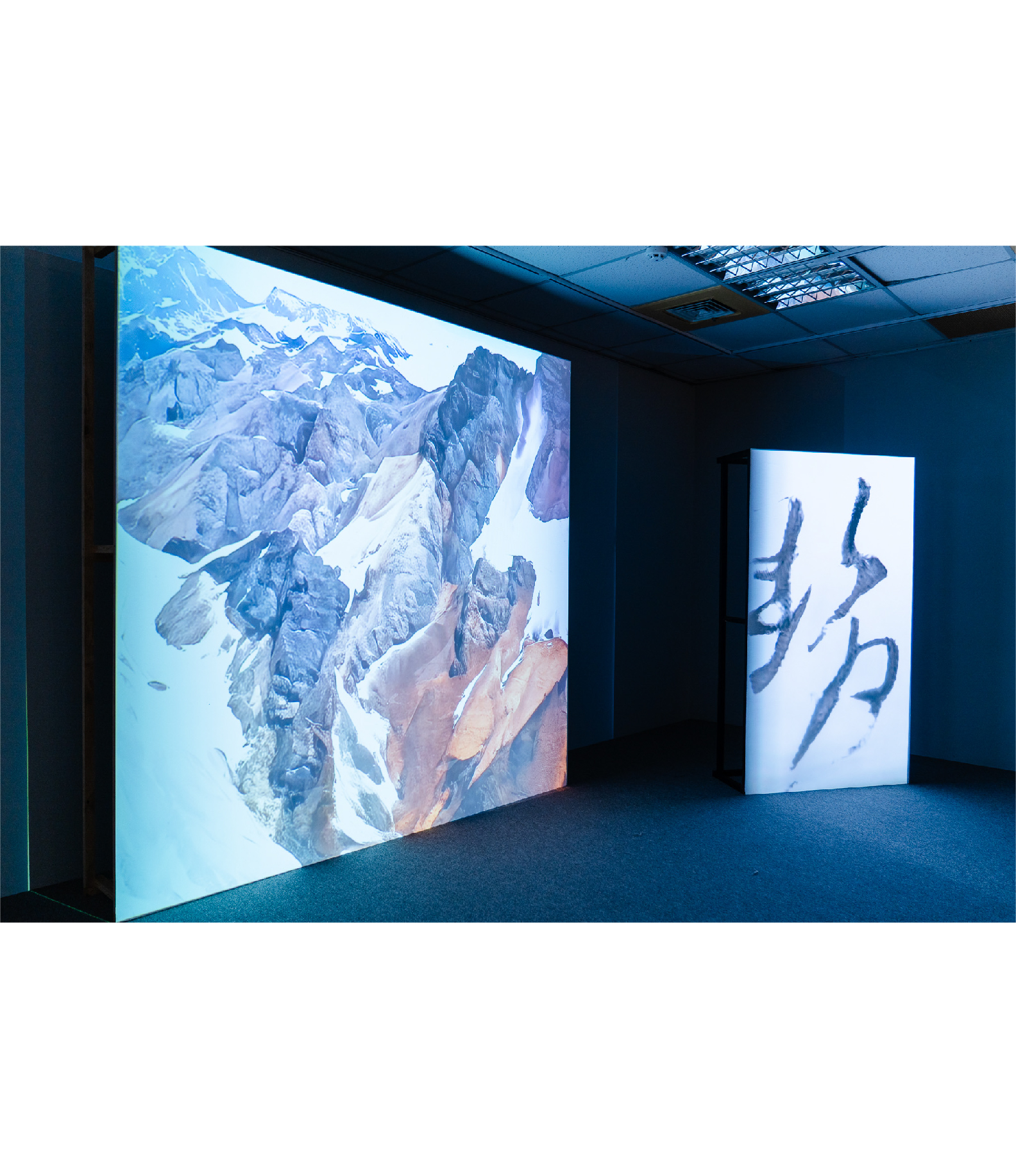
Calligrapedia: A Universal Algorithm
Media|Xuan paper, ink, digital inkjet print, moving image, two-channel sound
Dimensions|Variable
Year|2013–2024 (2026 remake)
About the Work|
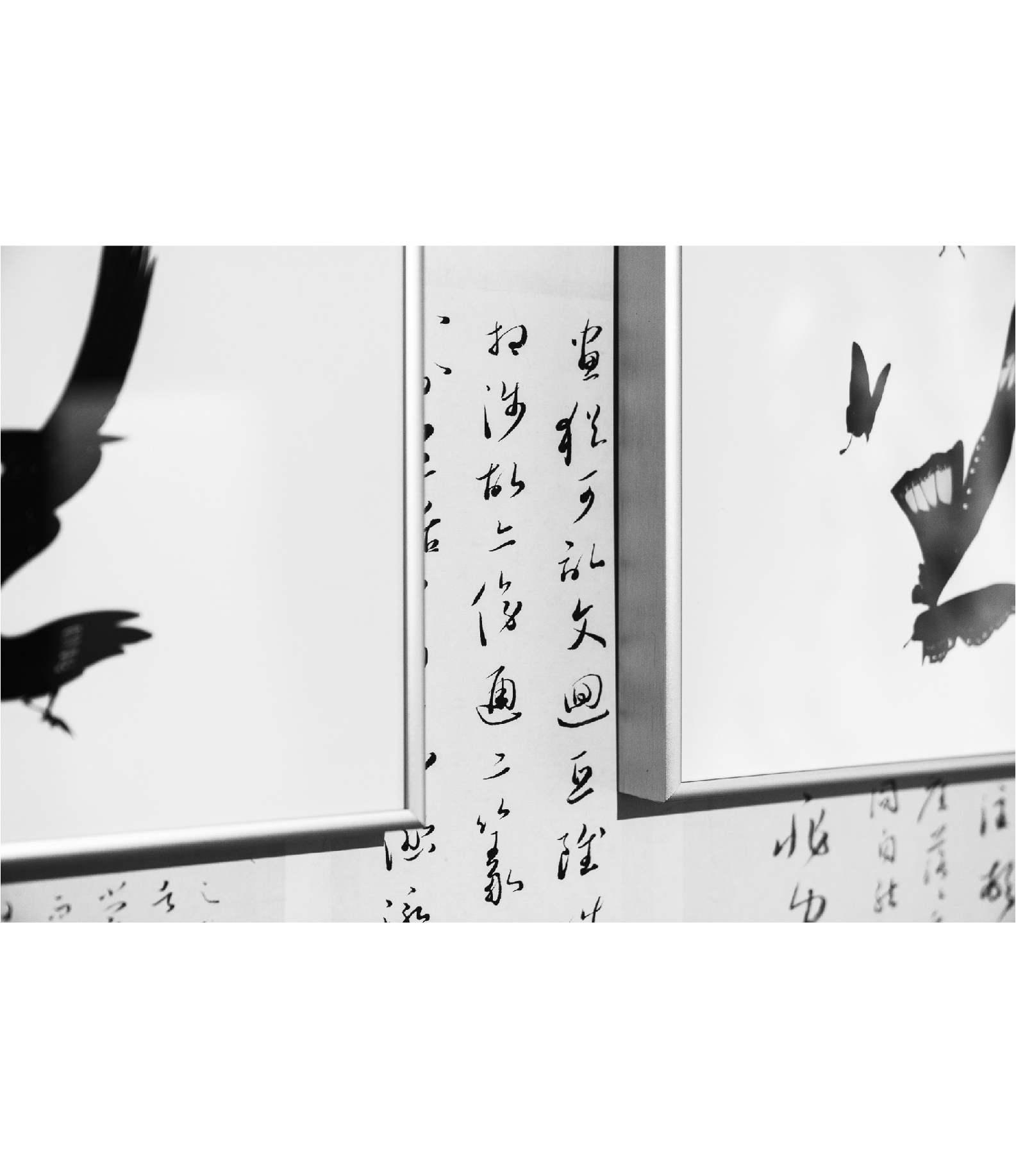
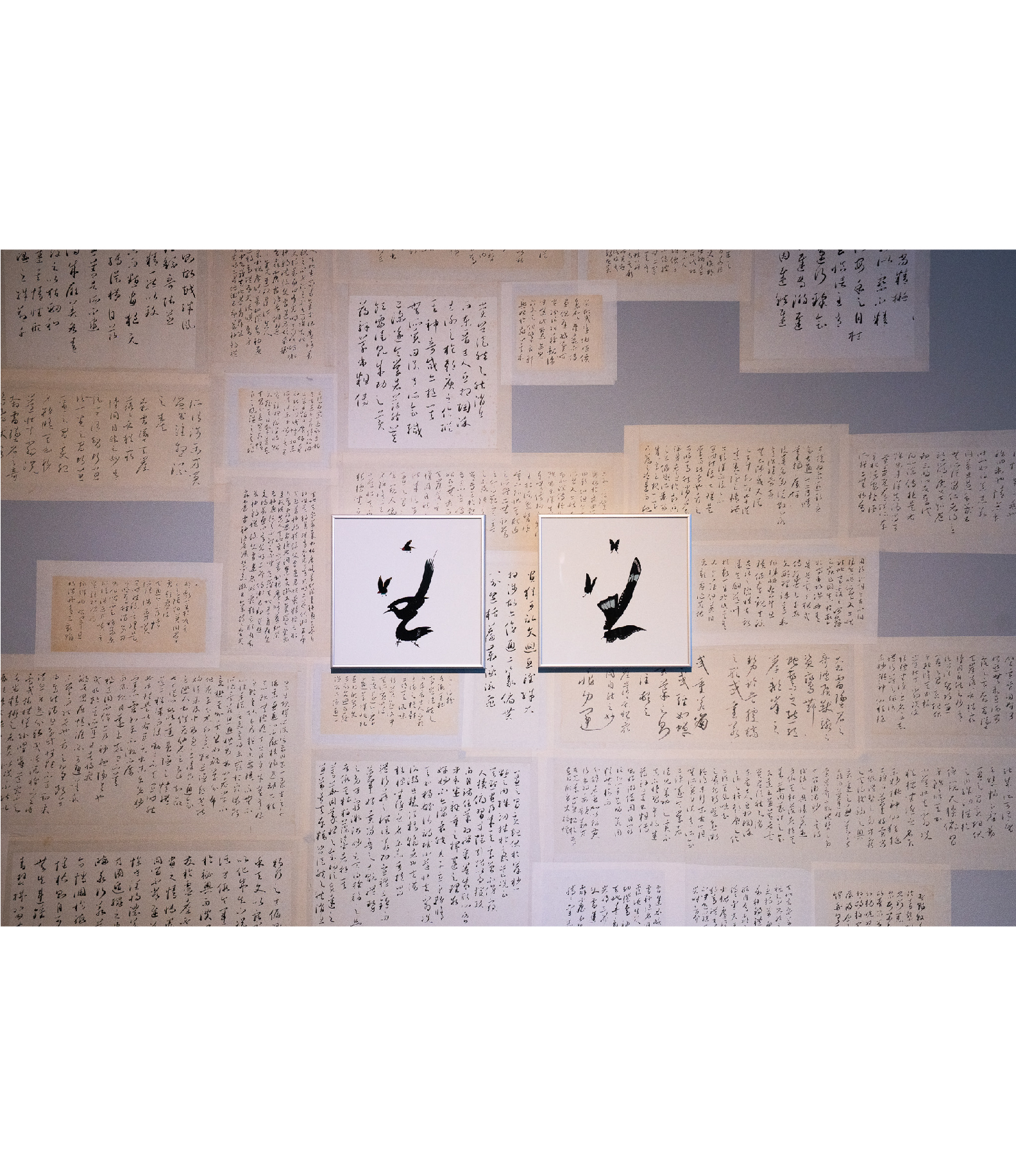
Calligrapedia: A Universal Algorithm grows out of the artist’s many years of copying Shu Pu, a Tang-dynasty masterpiece of cursive script long used as a model by calligraphy students. He fed a large body of these copies into machine-learning models and generative AI, drawing on landscapes, animals, plants, and other natural forms, to create a series of “human-machine characters” that move between writing and the natural world. Working with folk storytellers, the work also reinterprets ancient oral stories from around the world, with transformation at their heart.
Wang Hsiu Ju
About the Artist|
Wang Hsiu Ju holds an MFA from the Department of Fine Arts at National Kaohsiung Normal University and has long been active as a full-time artist in Taiwan’s contemporary art scene. Myth, dreams, and the collective unconscious are at the center of her practice. From them she has developed a visual language of eerie atmospheres and metaphorical imagery. Working across painting, installation, video, and other media, she explores the psychological structures and relationships between individuals and groups. She is also deeply engaged in local fieldwork and residency projects. She often spends long periods on site and creates work with residents of communities and Indigenous villages, turning social realities and lived memories into artistic actions that people can see, feel, and experience.
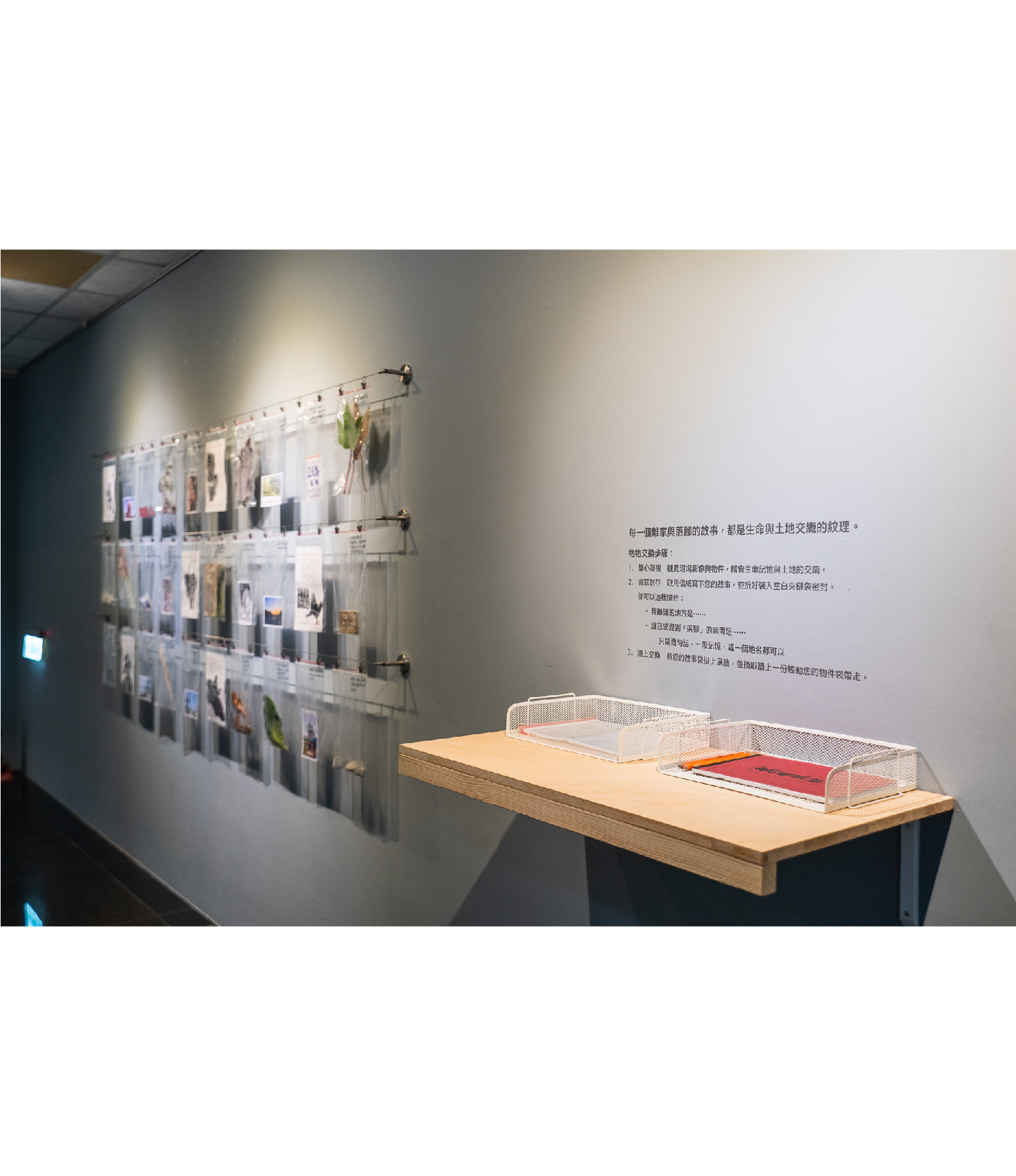
The Gift and Goods Exchange Project
Media|Mixed media (two-channel video, everyday objects)
Dimensions|Variable
Year|2026
About the Work|
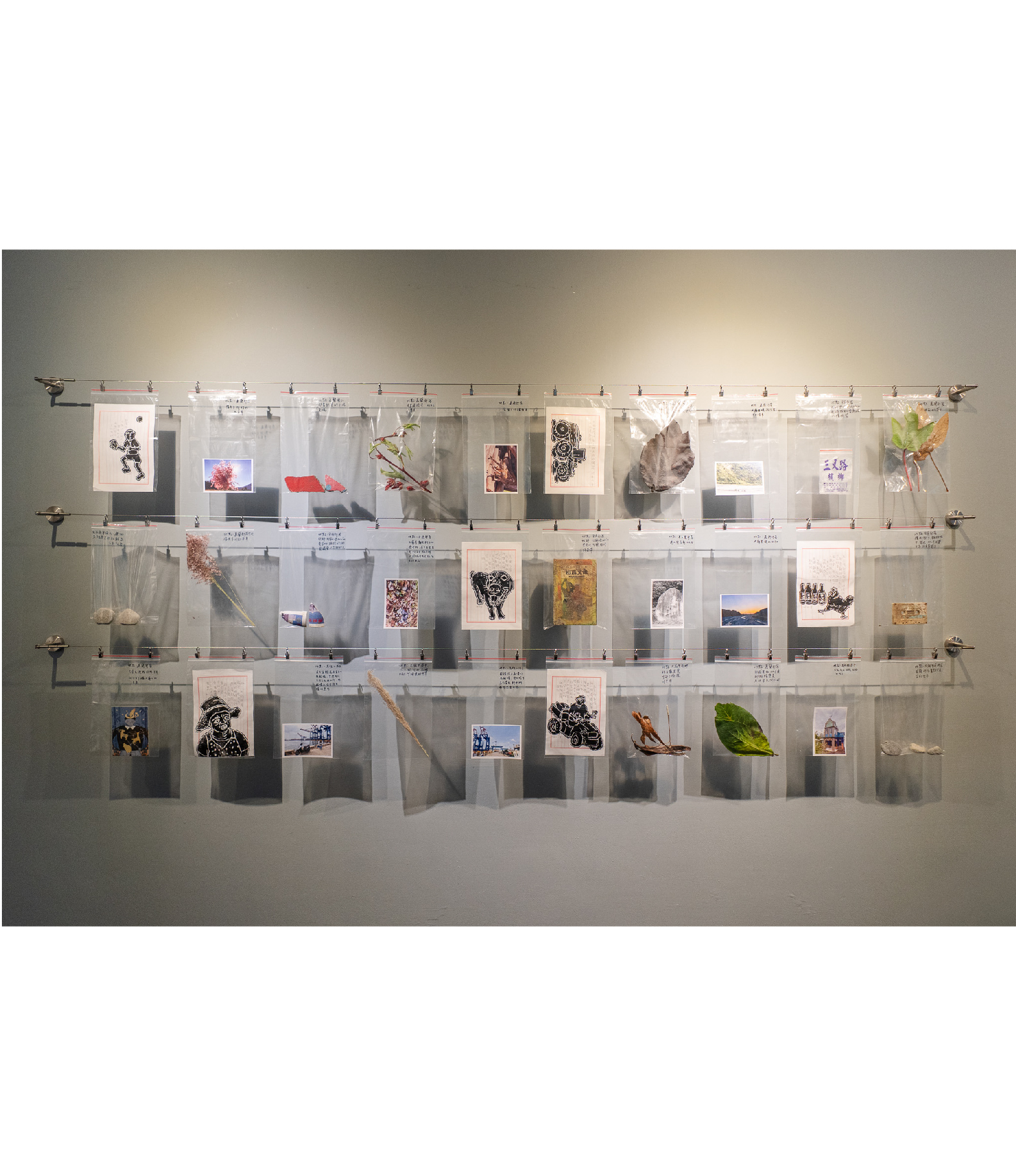
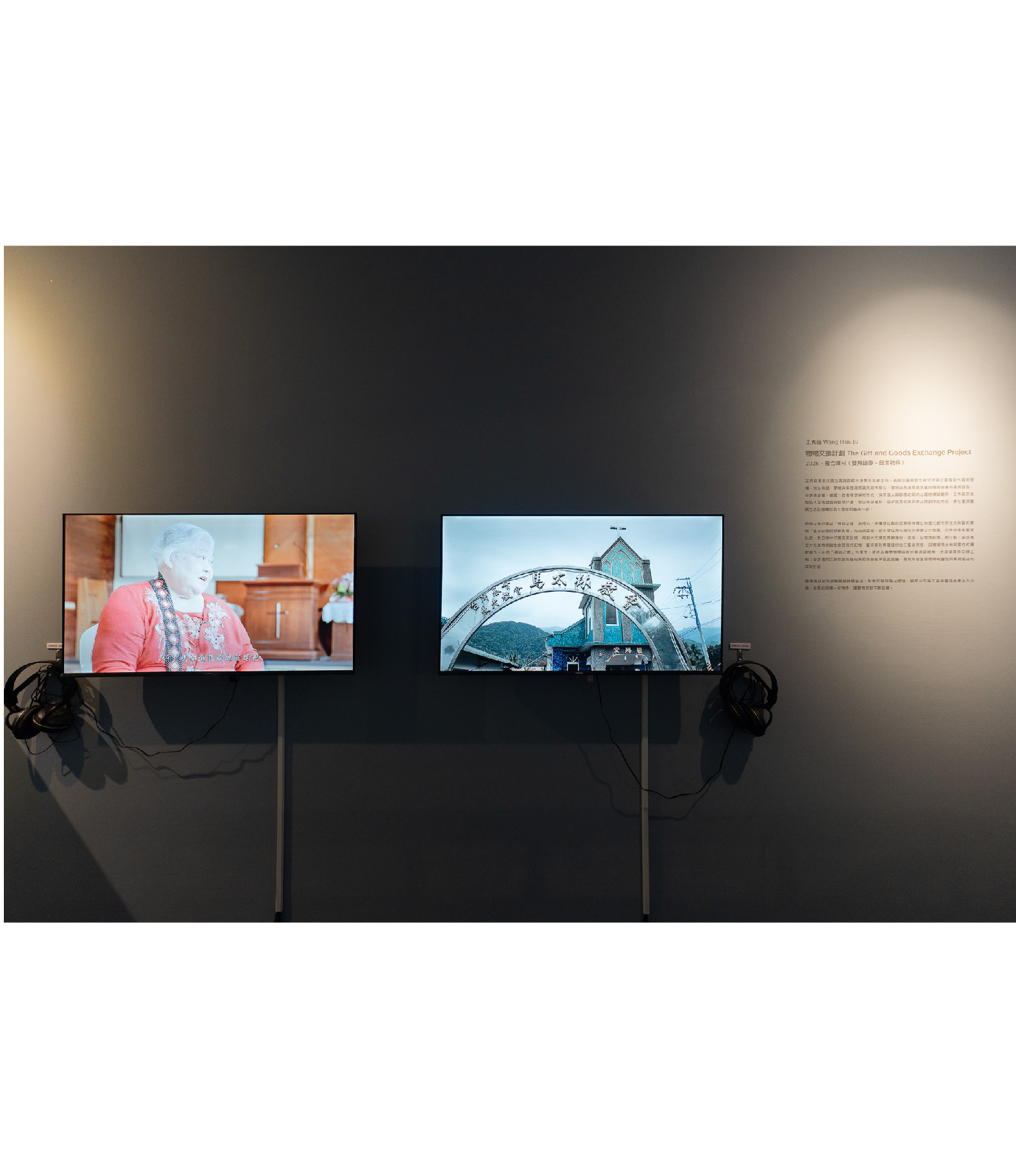
The Gift and Goods Exchange Project is built around the idea of gift exchange. Drawing on the reciprocity of traditional communities, it sets up an exchange between urban Indigenous people and the artist: their memories for images of their homelands.
Across generations, the urban Indigenous experience has shifted, from struggling to put down roots amid discrimination, to keeping community memories alive in everyday life, to openly embracing Indigenous identity. Interviewees entrust the artist with memories full of feeling and personal history. Carrying that trust, the artist travels to their homelands and, as a return gift, offers photographs of the land and its spirit. Echoing the idea of the “spirit of the gift,” each gift carries part of the giver’s soul and longs to find its way back to the land. The interviewees’ life stories and the artist’s view of their homelands meet in a deep conversation between two lives, connected by spirit and by ties to all things.
The exhibition keeps growing as interviews and homeland visits continue, adding new images and objects. Visitors can join the exchange by writing down their own migration stories and taking an object home, keeping these objects and the spirit they carry in motion.